
Waterwise Gardening
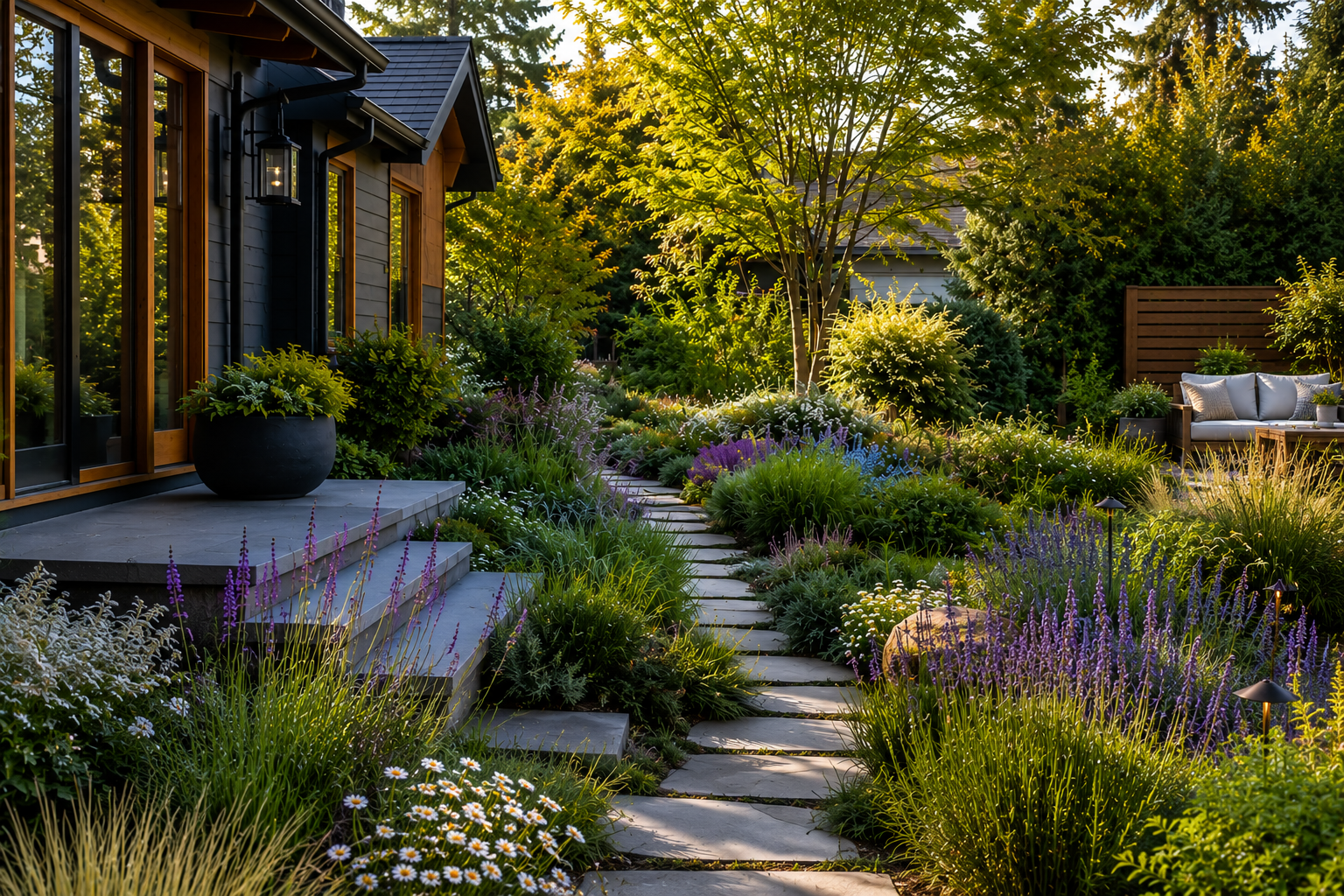
How to Reduce Water Use Without Sacrificing a Beautiful Garden
More homeowners in Portland are looking for ways to create landscapes that feel lush and inviting while using less water and requiring less maintenance. The good news is that thoughtful landscape design can dramatically reduce water use without sacrificing beauty.
At its best, sustainable landscape design is not about doing less, it is about designing smarter. With the right plants, materials, and planning, a low-water garden can feel vibrant, layered, and deeply connected to the Pacific Northwest climate.
Start With Climate-Adapted Plants
One of the biggest misconceptions about drought tolerant landscaping is that it has to look dry or minimal (think southwest design). While these types of gardens have their place the reality is, some of the most successful Portland garden design projects use plants that naturally thrive in our climate with very little supplemental irrigation once established.
A well-balanced planting design might include:
Ornamental grasses
Mediterranean plants
Pacific Northwest natives
Evergreen shrubs
Climate-adapted perennials
Plants like lavender, salvia, yarrow, sedum, and manzanita provide texture, movement, and seasonal color while handling Portland’s increasingly dry summers remarkably well.
The key is choosing plants that work together visually while also matching the site’s unique microclimate.
Improve Soil Health
Healthy soil is one of the most overlooked parts of low water landscaping. Soil rich in organic matter retains moisture longer, helping plants stay healthier between watering cycles.
In many Portland landscapes, compacted heavy clay soil prevents water from reaching plant roots efficiently. Adding compost and organic amendments before planting can make a significant difference over time.
Mulch also plays an important role by regulating soil temperature, suppressing weeds, and reducing evaporation during warmer months. Take head to avoid adding sand or gravel to soil. It seems counterintuitive, but adding these to soil will result in a much more dense, concrete like soil.
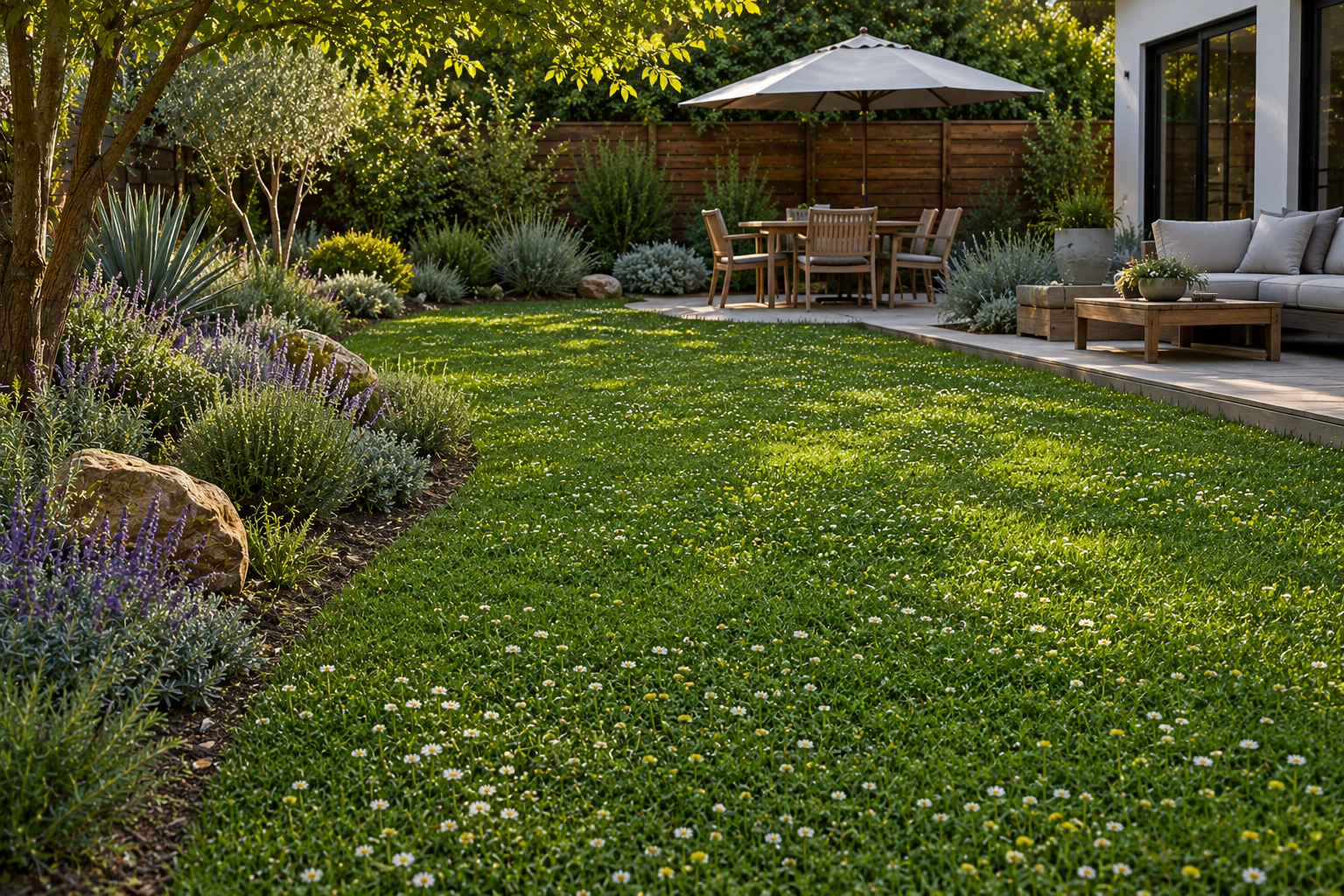
Consider an Eco Lawn
-Fleur de lawn is our favorite
Traditional turf lawns are often one of the thirstiest parts of a landscape. For homeowners who still want the look of a green lawn, eco lawns can be an excellent alternative.
One of our favorite options is Fleur de Lawn, a blend of fine fescues, clover, English daisies, chamomile, and yarrow. The clover helps keep the lawn lush and green nearly year-round with less water, while the daisies and yarrow add softness and seasonal texture. Chamomile also gives the lawn a fresh scent when walked on during summer months.
Eco lawns generally require less irrigation, fertilizer, and mowing than conventional turf, making them a great fit for sustainable landscape design in Portland Oregon.
For areas that are underused, replacing portions of lawn with planting beds, gravel pathways, or outdoor living spaces can further reduce maintenance while adding more visual interest to the garden. If an eco lawn isn’t your thing, simply reducing the overall size of your lawn can go a long way.
Water More Efficiently
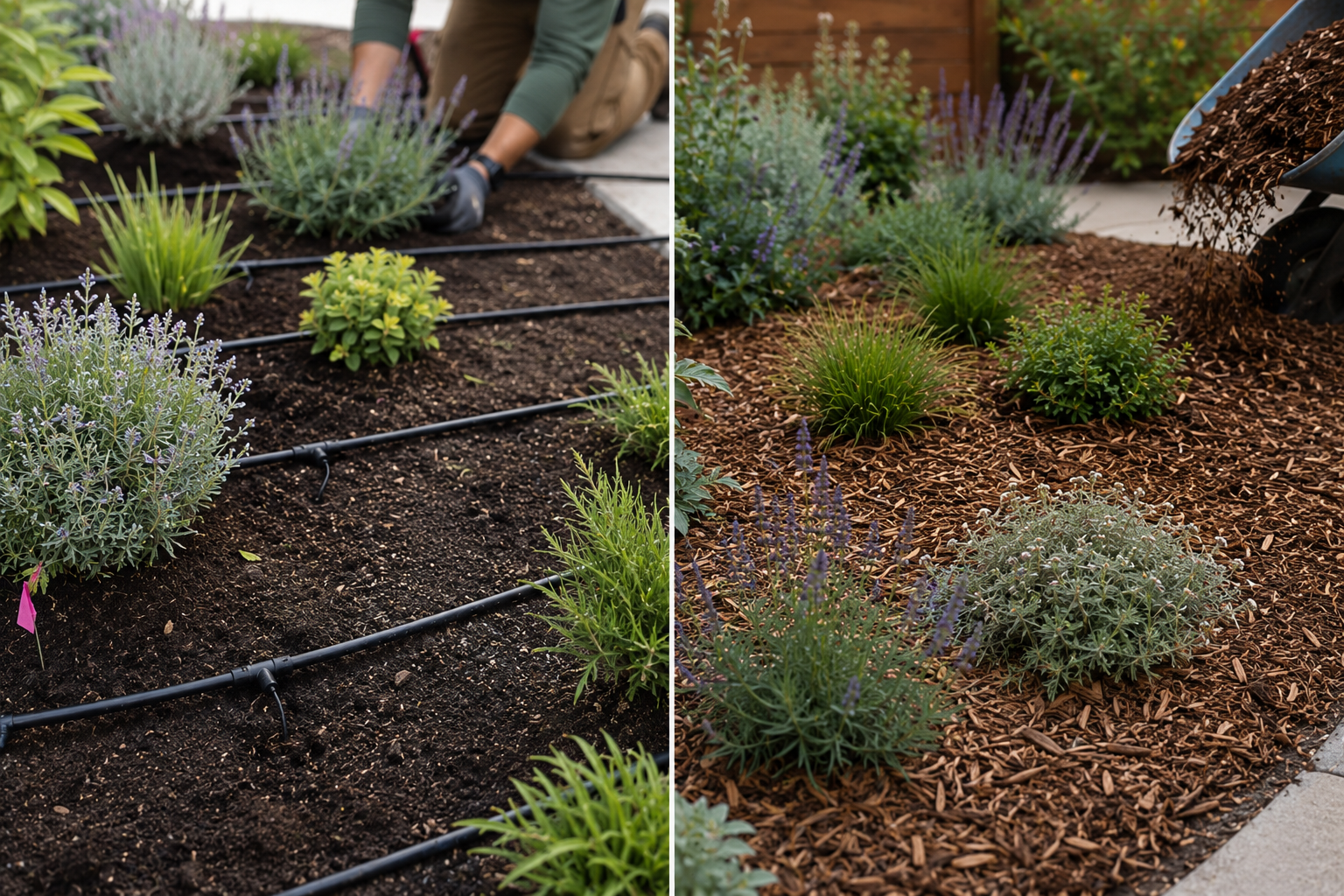
Efficient irrigation is just as important as plant selection. Drip irrigation systems are typically far more effective than traditional spray systems because they deliver water directly to plant roots instead of oversaturating surrounding areas.
Another common issue in Portland landscaping is shallow watering. Deep, infrequent watering encourages stronger root systems and helps plants become more resilient during heat waves and dry periods.
Grouping plants with similar water needs together can also help prevent unnecessary water use. This particularly helps when you are still hooked to a few water loving plants like hydrangea, roses, or flowering perennial plants. We’re not against having these, but let’s intentionally plan for them.
Designing for Long-Term Beauty
The best landscape design feels natural, functional, and enduring. A water-wise garden should still feel welcoming and connected to the home.
That might include:
Shade trees for cooling
Layered planting beds
Year-round evergreen structure
Pollinator-friendly planting
As Portland summers continue to become warmer and drier, designing with water conservation in mind is becoming less of a trend and more of a practical long-term approach.
A thoughtfully designed low-water garden can still feel lush, modern, and distinctly Pacific Northwest while requiring fewer resources and less maintenance over time.