
the case for hellebores
Hellebores Rule
Worth the hype?
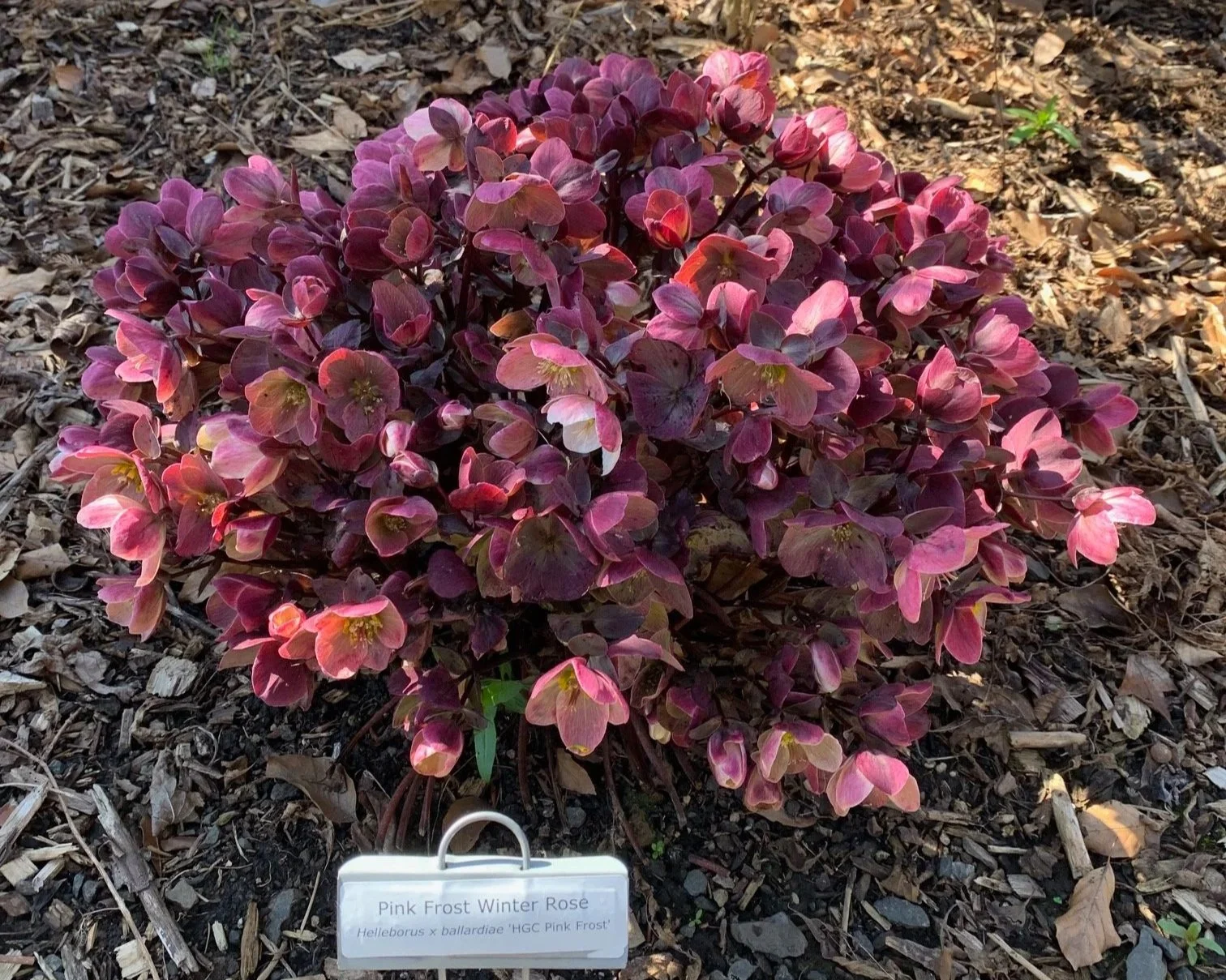
Hellebores are hot right now – suddenly there are one zillion cultivars in a range of heart-wrenching jewel tones, and it seems like all the big growers have bred (and branded) their own collections. They’ve even made the cut for the New Seasons impulse-buy entry display (which I have successfully resisted thus far!). And for good reason…this winter-blooming woodland fairy has a lot to give.
I really only learned of the existence of hellebores in the last eight or so years. Now, I include them in nearly every garden design because they are beautiful, shockingly tough, and many of them bloom in the winter months when we need it most. Since learning of the genus Helleborus, which includes 15 species, according to Portland Nursery, I have been accumulating them and subjecting them to the rigorous test conditions of my yard. It has become my quest to discover what they can handle.
Here is what I have found, which happens to also be what I love about hellebores:
They are tough!!
I started my collection in our north side yard/dog run, where my Picardy Shepard, Marty has free access and free reign. They get stepped on, peed on, pooped on, and barely watered. Yet they persist without ever complaining and provide the loveliest winter view from our living room window.
*Hellebores can be toxic to dogs and cats if eaten. If your pets chew on plants, best not use these in their spaces.
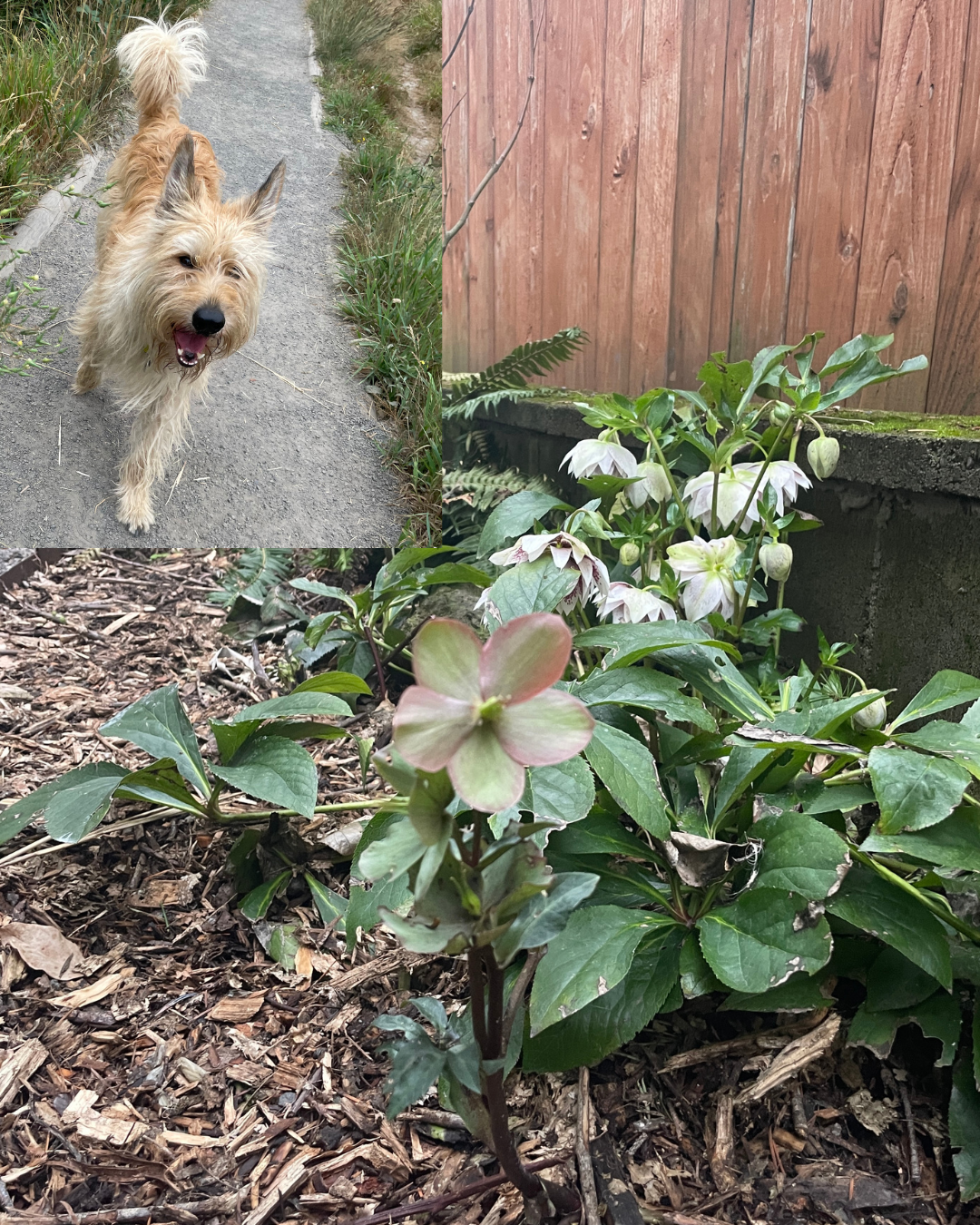
-Marty’s Hellebore patch she dutifully cares for by peeing, stepping, and occasionally pooping on. She refused to come out and pose next to her plants because she thought I wanted to give her a bath. Her loss.
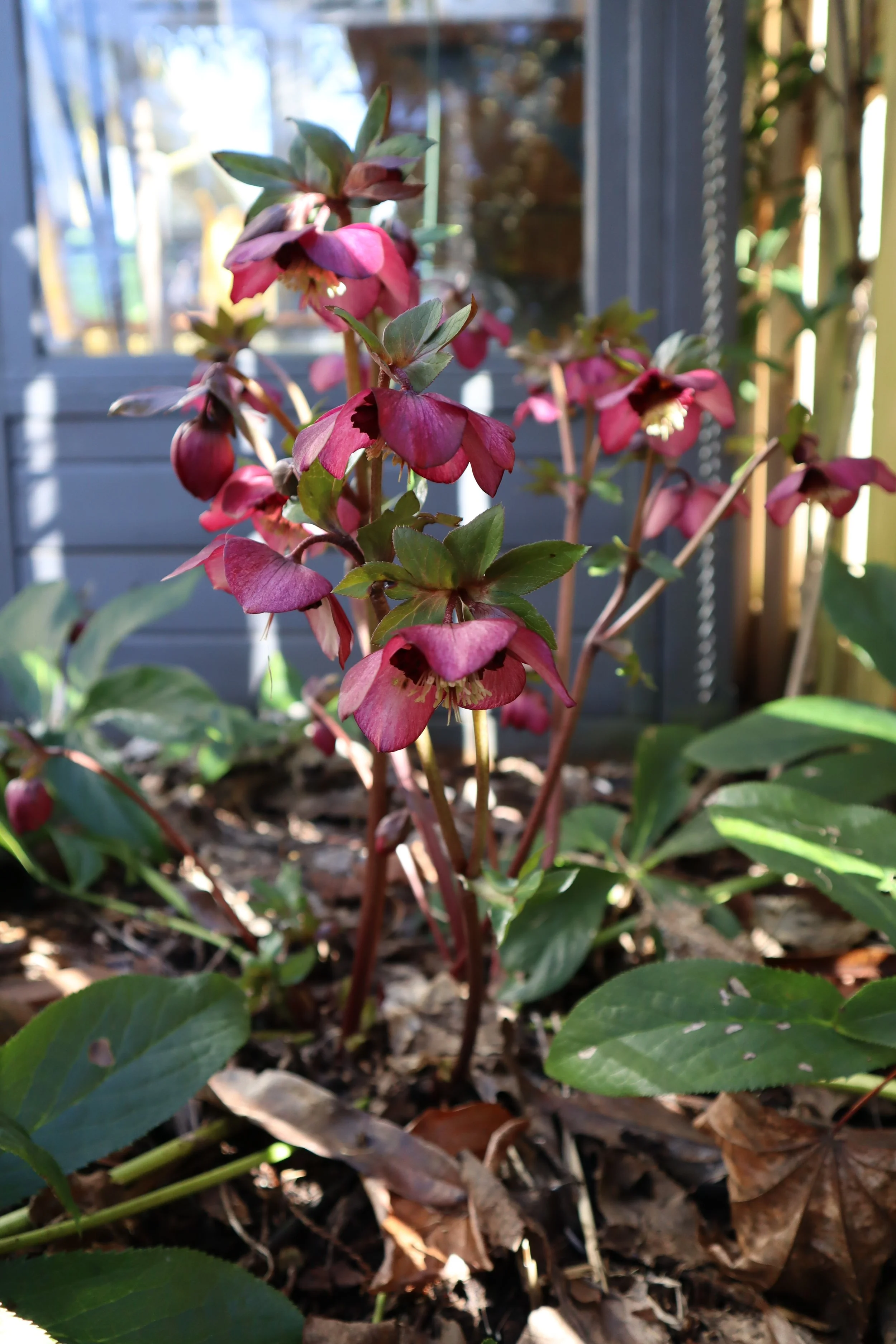
They bloom in winter
Depending on the species/cultivar, they may bloom from fall into late spring and beyond. This brings much joy during the darkest, grayest depths of Portland winter.
-I don’t know who she is but she pretty.
They are climate adapted
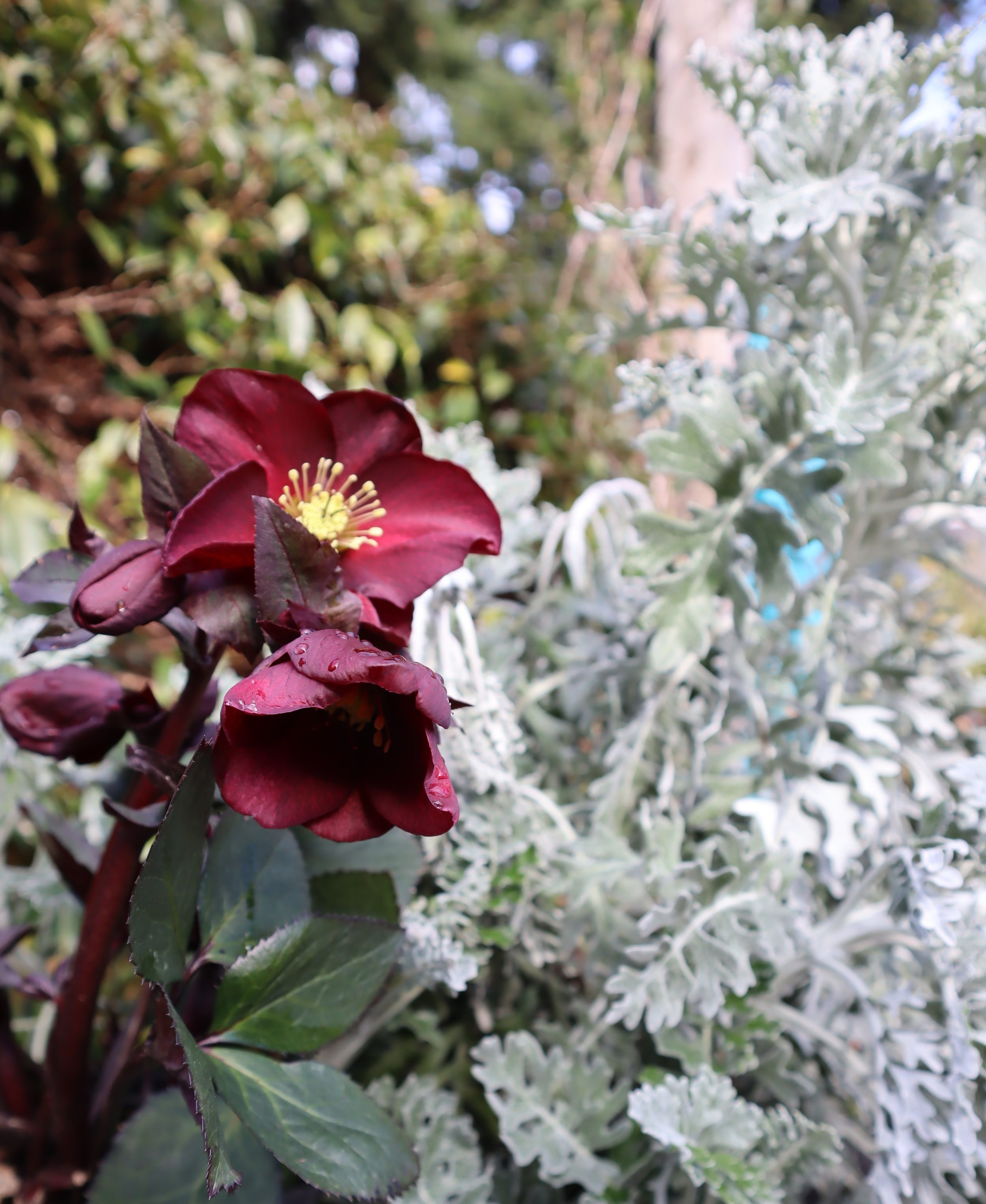
Until recently, I rarely saw hellebore included on lists of plants for dry shade, so I have been shocked by how little water they require to stay healthy and happy in our dry season.
-Helleborus × glandorfensis ‘Merlot’ looking fly next to dusty miller
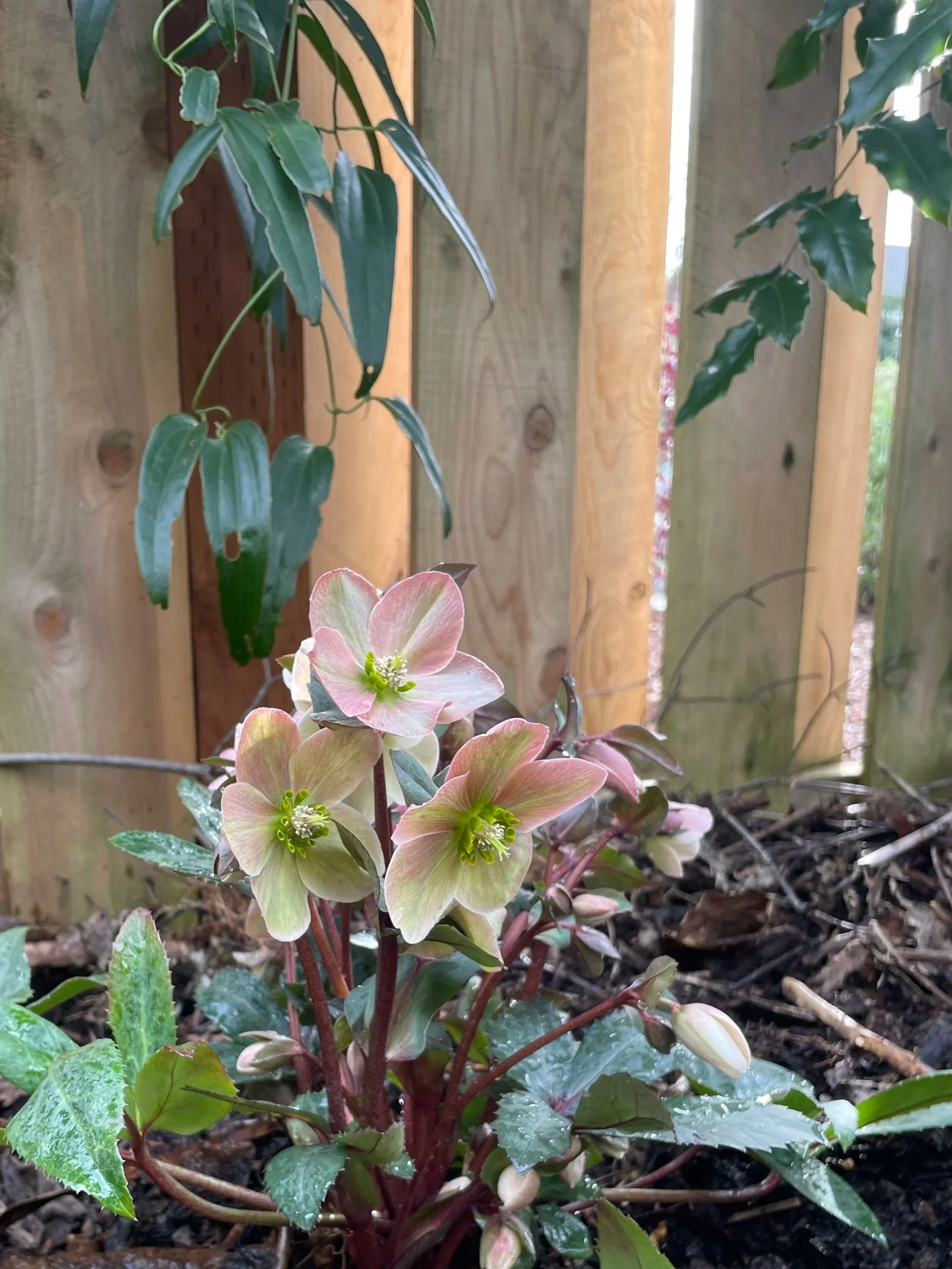
Evergreen foliage
Many are evergreen or semi-evergreen (at least in our USDA zone 8b gardens). This means they maintain their large, striking, green foliage throughout the year.
-My newest addition, Helleborus × ballardiae ‘Pink Frost’.
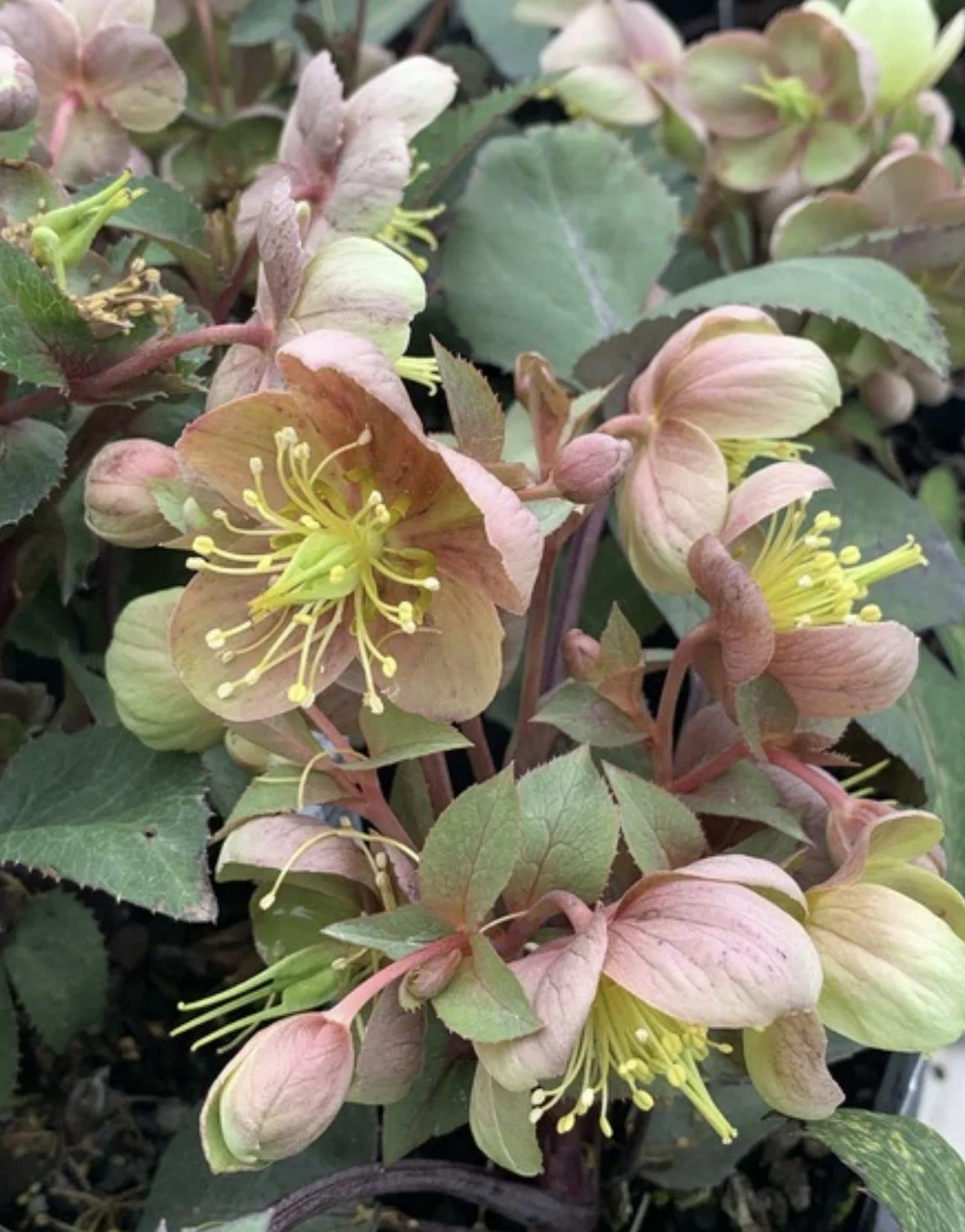
Sun and shade varieties
Though known for their love of shade, there is a hellebore for most light conditions, including full sun. If you have a sunny yard, Helleborus × sternii can hang.
-Helleborus × sternii
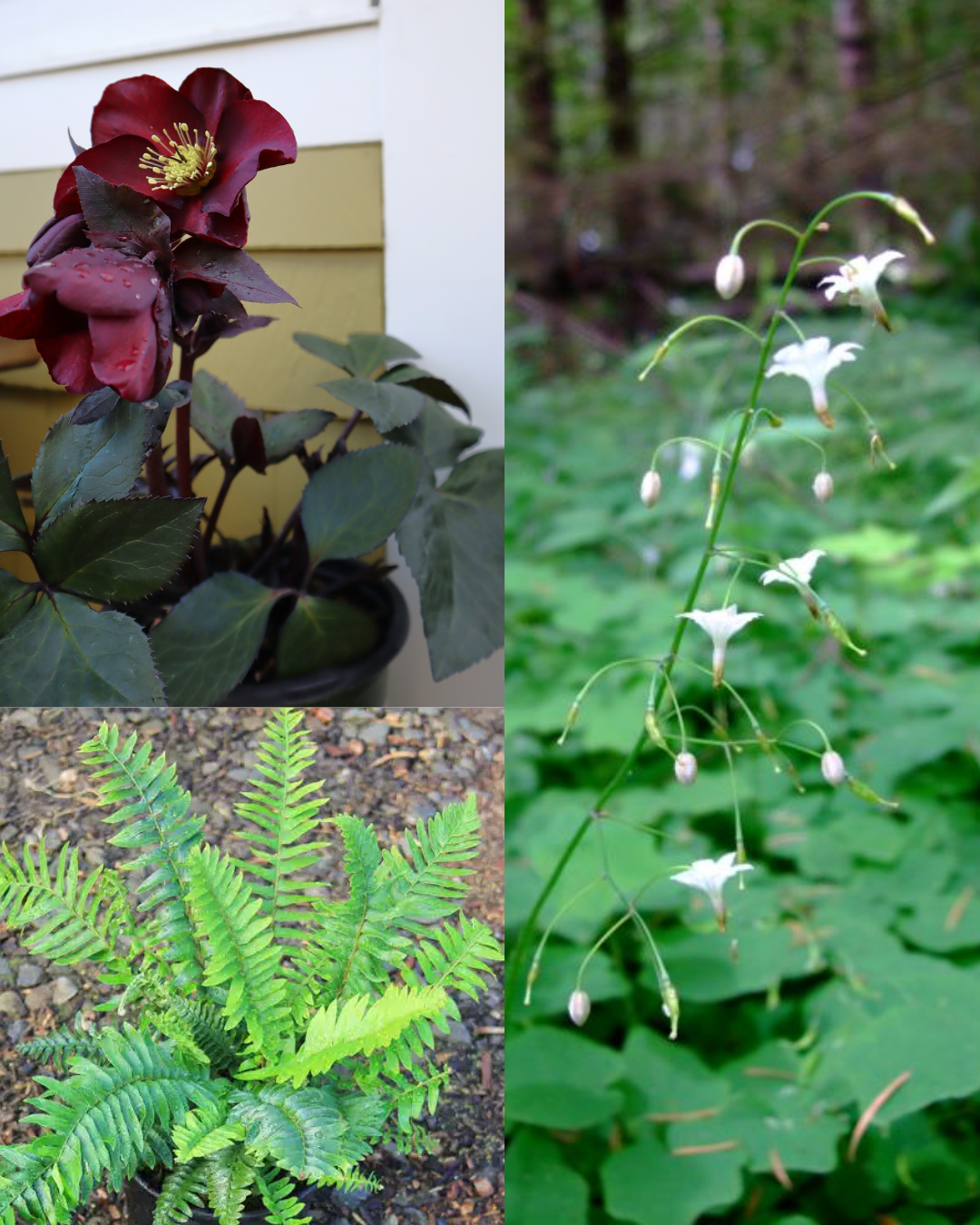
They play nice with others
They look really good mixed with one of my all-time favs, Oregon native (and fellow tough-as-nails woodland stunner), the Western sword fern (Polystichum munitum) and one of my other favorites, inside-out flower (Vancouveria hexandra).
Despite my unwavering love for this versatile genus, I am certainly no expert. If you would like to read more about them, I recommend these sites created by people who really know what they’re doing:
Portland Nursery Plant Library
Written by: Liz Schneider