
plants are shrinking
Why Plant Growers Are Breeding Smaller Trees and Shrubs
& Some of My Favorite Small Tree Varieties for Residential Landscapes
If you've visited local nurseries recently, you may have noticed more compact trees and shrubs showing up on the shelves. Plant growers are increasingly introducing dwarf, compact, and columnar varieties of popular plants, and there's a good reason for it.
Our residential lots, especially in urban and suburban neighborhoods, are getting smaller, but our desire for beautiful gardens and trees remains the same. Homeowners still want shade, flowers, privacy, and seasonal interest. The challenge is fitting those plants into smaller spaces without creating problems down the road.
I was recently reminded of this when I moved into a house built in the 1950s. The previous owners had planted large camellias and junipers close to the house. What may have looked perfectly reasonable when they were installed eventually became oversized and difficult to manage. In the end, they had to be removed entirely.
Sound familiar?
As a landscape designer, I hear versions of this story all the time. A shrub blocks a window. A tree outgrows its space. Foundation plantings become a maintenance headache. Most of these problems aren't caused by bad plants. They're caused by plants being placed where they simply don't belong long-term.
That's why "right plant, right place" is our golden rule in landscape design.
When I'm creating a garden design, I'm not designing for what the garden will look like next month. I'm designing for what it will look like three, five, or even ten years from now. A newly installed landscape is often the least impressive version of itself. Plants need time to establish, mature, and fill in naturally. Most gardens really begin to come alive around the three-year mark.
This long-term perspective is also why I'm cautious when clients request the fastest-growing plants available. Fast growth often comes with tradeoffs. Plants that grow quickly can outgrow their intended spaces, require more pruning, develop weaker branch structures, and become more susceptible to storm damage. Some fast-growing plants can also spread aggressively or become invasive in certain regions.
Good landscape design requires patience. The goal isn't to create a garden that looks fully mature on day one. The goal is to create a landscape that will still look beautiful and function well years from now. And to take a note from nature, it’s okay to slow down.
Fortunately, plant breeders have responded to this challenge by developing more compact versions of many beloved trees and shrubs. These smaller varieties make it easier to enjoy the benefits of trees in small yards, create low-maintenance landscape designs, and avoid the costly mistakes that happen when plants outgrow their spaces.
With that in mind, here are a few of my favorite trees for small spaces.
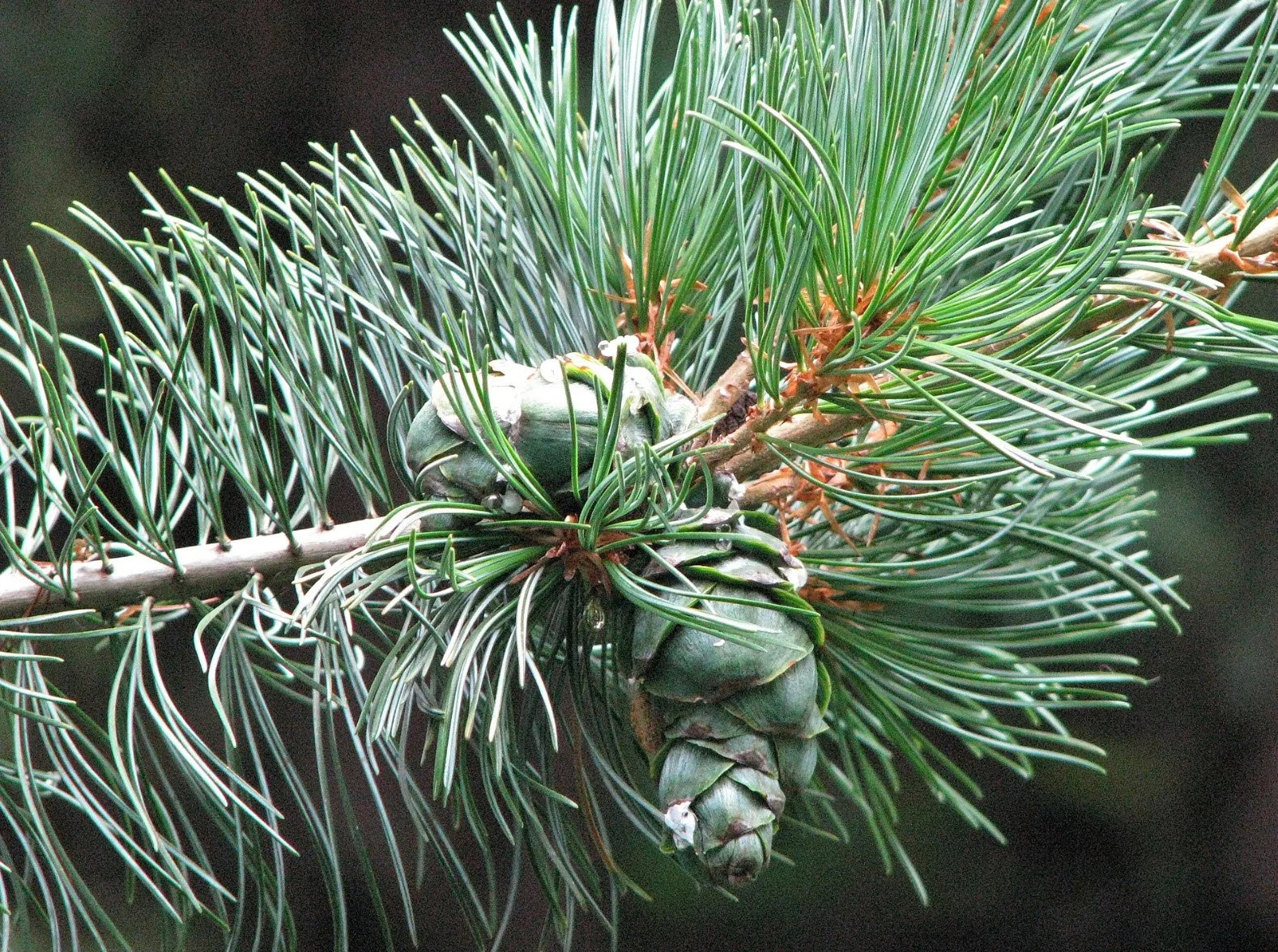
Pinus parviflora ‘Glauca’ | Blue Japanese White Pine
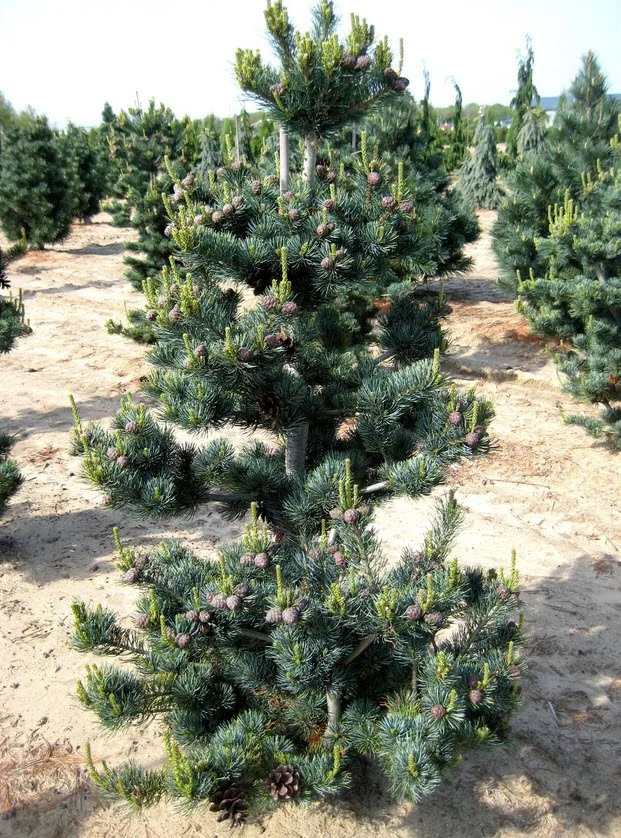
The Blue Japanese White Pine is prized for its picturesque, layered form. Horizontal branching creates distinct tiers, while abundant cones gently weigh down the branch tips, lending the tree a graceful appearance. Soft blue-green needles with silvery undersides add year-round color and texture. It’s a great specimen piece that stands on its own.
Height: 9-12 ft
Width: 5-8 ft
Sun: Full
Water: Moderate
Season: Evergreen
Acer circinatum 'Pacific Fire' | Pacific Fire Vine Maple
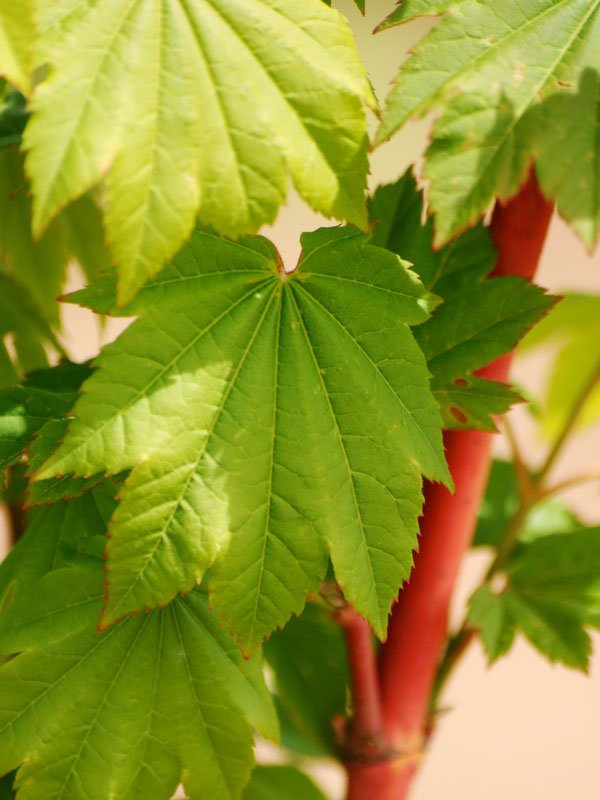
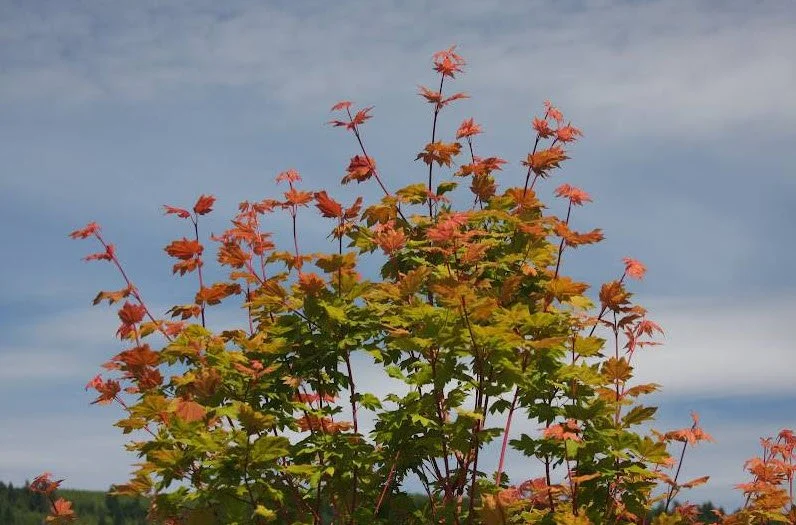
Pacific Fire is my favorite variety of vine maple for year-round interest. In winter, its vivid orange-red stems seem to glow, especially when low sunlight catches their smooth, glossy surface. The foliage often develops warm bronze tones in sunny locations, adding another layer of color.
Like the species, it naturally forms a multi-stemmed shrub or small tree, but with a more restrained growth rate. In autumn, bright yellow leaves with hints of orange create a striking contrast against the colorful bark. Reaching about 10 feet tall in eight years, it's well suited to smaller gardens and woodland-inspired landscapes. Pacific Fire performs surprisingly well in some sun and heat, though some leaf scorch can occur during extended heat.
Height: 12 ft
Width: 8 ft
Sun: Half, Shade
Water: Low-Medium
Season: Deciduous
Acer crataegifolium 'Veitchii' | Hawthorn Leaf Maple
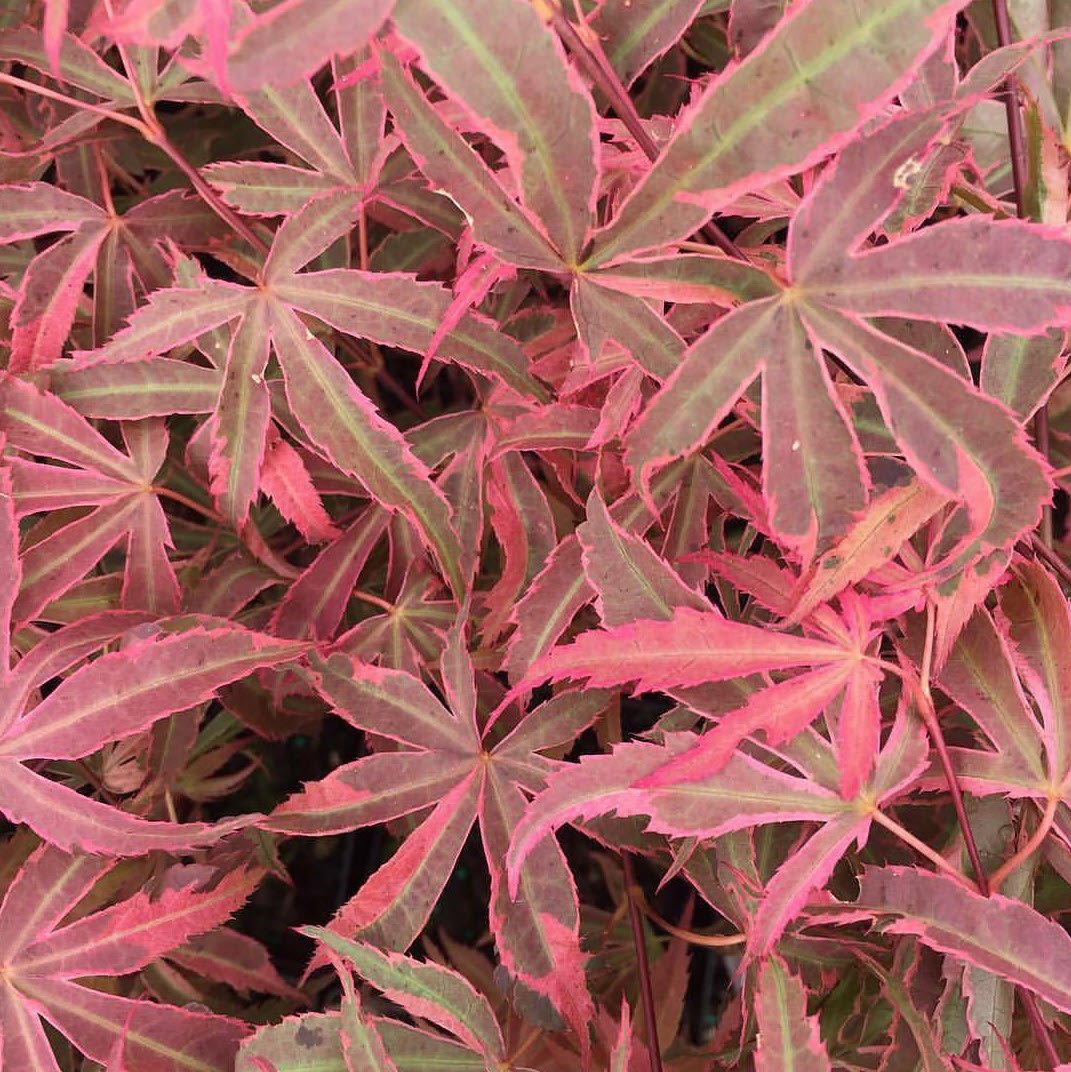
Each spring, Acer crataegifolium 'Veitchii' unfurls leaves that look as though they've been brushed with watercolor. New growth emerges in shades of soft pink, splashed and streaked with creamy variegation that catches the eye from across the garden.
Slow-growing, 'Veitchii' develops into a small tree of about 8 feet tall and 6 feet wide in ten years, making it an excellent choice for intimate garden spaces, front yards, and tight spaces. In warmer climates, it appreciates protection from the afternoon sun, where its variegation can be enjoyed without stress. Hardy to -10°F.
Height: 8 ft
Width: 6 ft
Sun: Half, Full
Water: Medium
Season: Deciduous
Arbutus unedo 'Compacta' | Dwarf Strawberry Tree
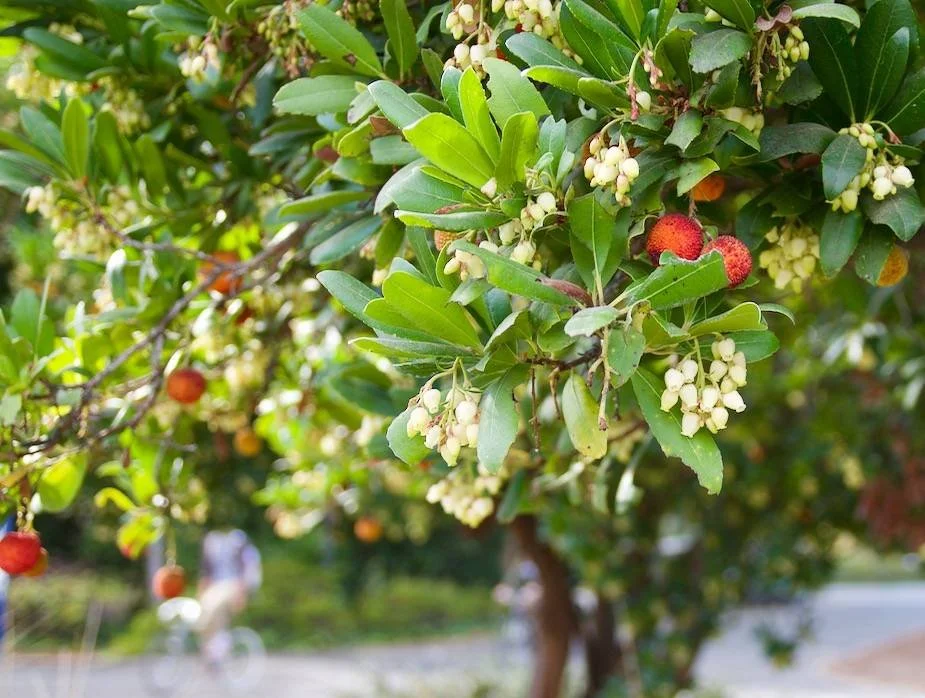
This is one of those plants that looks good most days of the year. Its soft green leathery foliage shows off through every season, while white flowers and bright red fruit also put on a show. I even like the fruit when it’s green and also when it expires. It adds a nice texture.
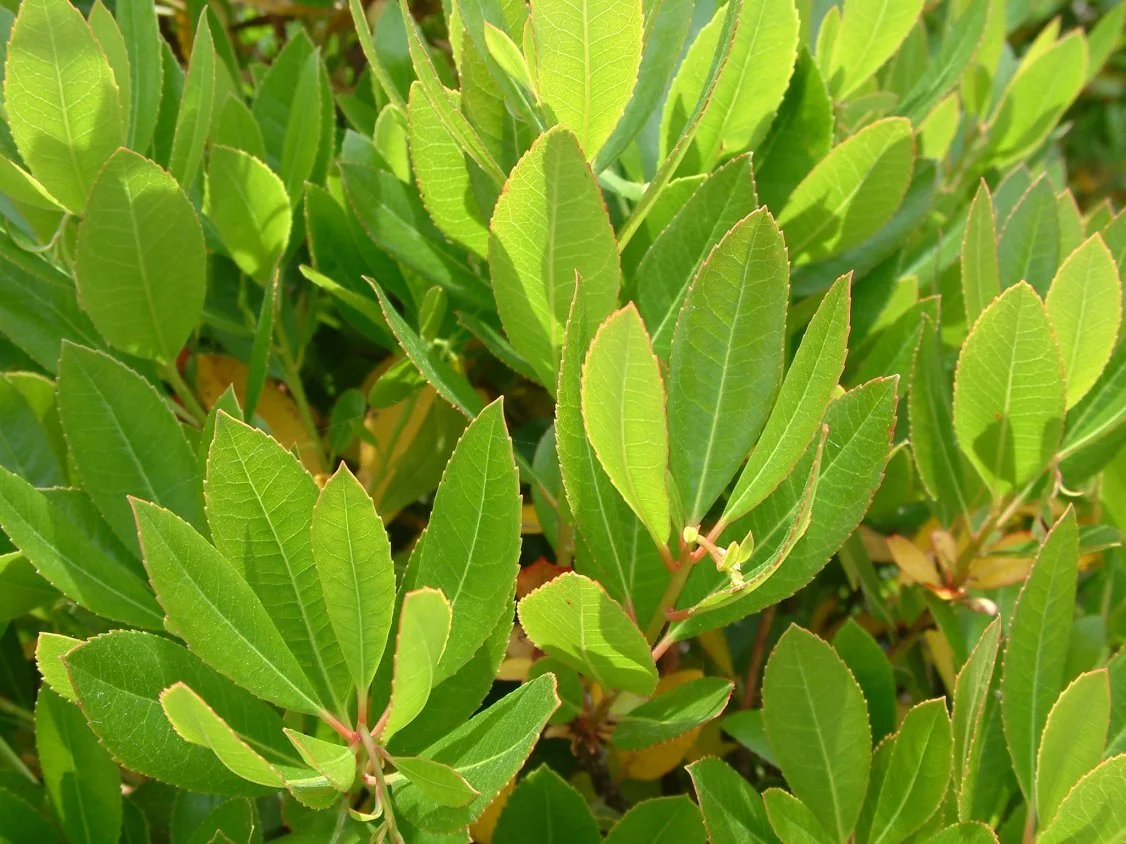
One day, while I was gardening in my front yard, someone stopped to ask about this tree growing in my neighbor's garden. Even among a neighborhood full of beautiful plants, it had caught their attention enough to stop and ask what it was. On top of that, it attracts birds and wildlife.
Height: 7-10 ft
Width: 7-10 ft
Sun: Half, Full
Water: Low
Season: Evergreen/ all seasons
Azara microphylla | Box-leafted Azara
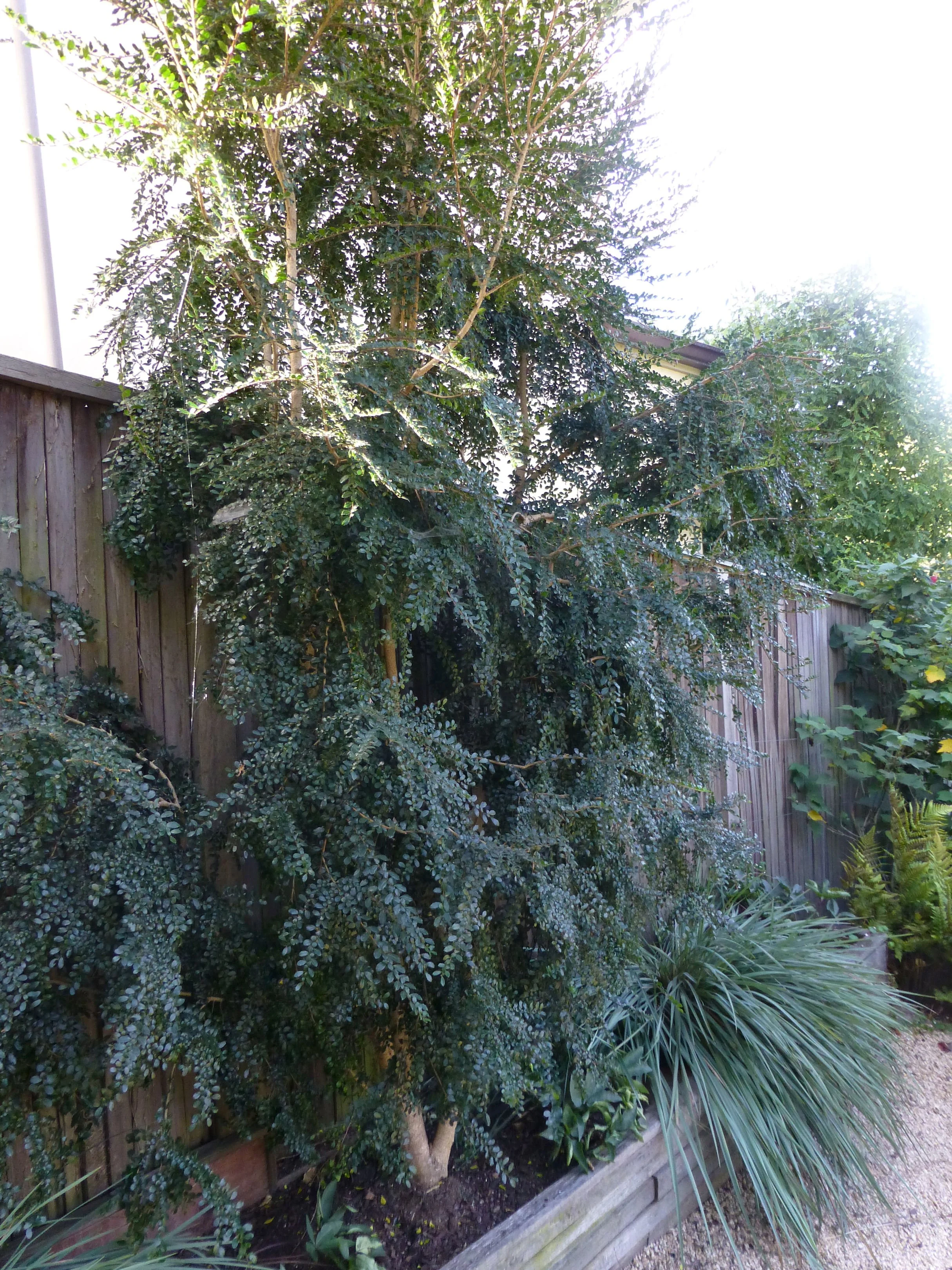
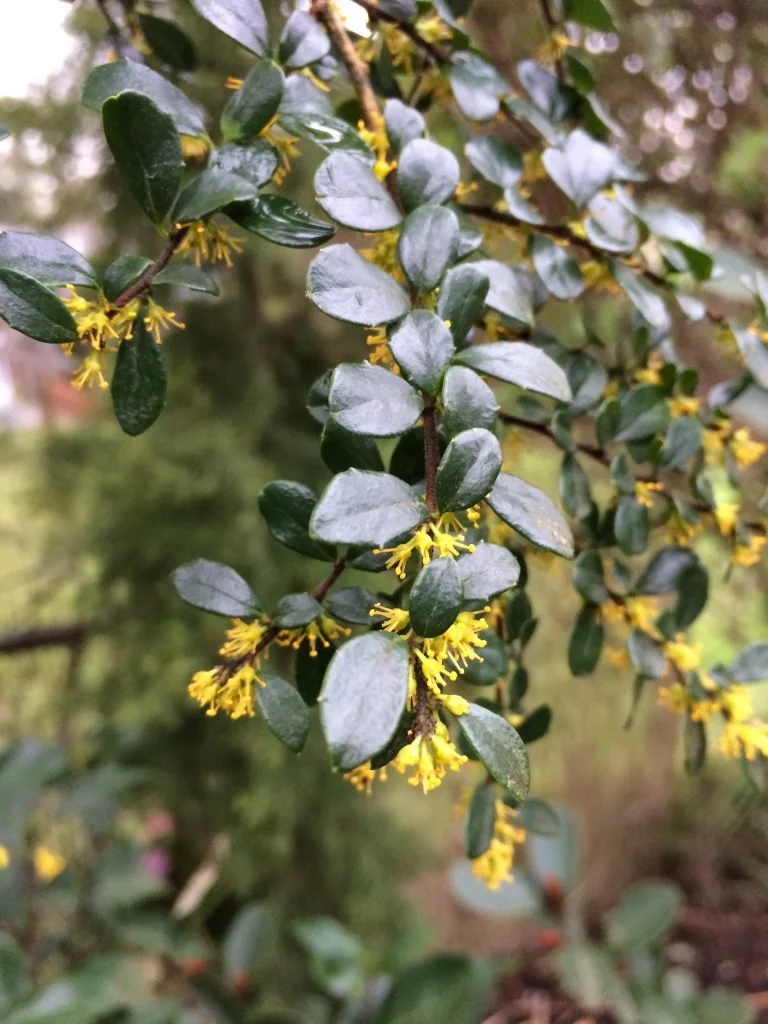
Azara microphylla has been a favorite among Pacific Northwest gardeners for years, but I think it's due for a revival. In a world full of broadleaf evergreens with large, heavy foliage, its tiny, glossy leaves bring a finer texture that feels both elegant and unexpected. The foliage remains attractive year-round, creating a soft, refined presence in the garden even during the darkest months.
I'm also partial to any plant that chooses to bloom in winter, and Azara does so with remarkable timing. In late winter, usually around February, its branches become dotted with small yellow flowers that fill the air with a fragrance that's difficult to forget. Some people swear it smells like chocolate. Others insist it's vanilla. I'll let you decide.
Whether grown as a tall shrub or a narrow tree, Azara microphylla can reach 20 to 25 feet in about ten years. Yet for me, its greatest contribution isn't its size or form. It's that unexpected moment on a cold winter day when you catch its scent drifting through the garden and remember that spring isn't far behind.
Height: 20-25 ft
Width: 6-8 ft
Sun: Half, Full
Water: Medium
Season: Evergreen/ all seasons
Cornus kousa 'Summer gold' | Summer Fire Dogwood
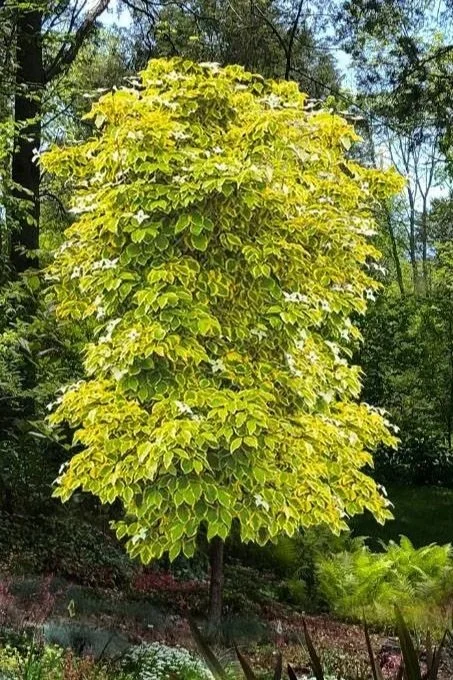
I'll admit that many dogwoods tend to blur together for me. They're beautiful trees, but after you've seen enough of them, they can start to feel a bit familiar. This one always stops me in my tracks.
What first catches my eye is the foliage. The leaves emerge bright green with bold golden edges, giving the entire tree a glowing quality that stands out even when it's not in bloom. As the season progresses, hints of pink appear in the foliage in summer before it transitions to brilliant shades of red in fall.
Spring brings the classic dogwood display of creamy white bracts, but for me, this tree is really about the foliage and the way it carries the garden through the entire growing season.
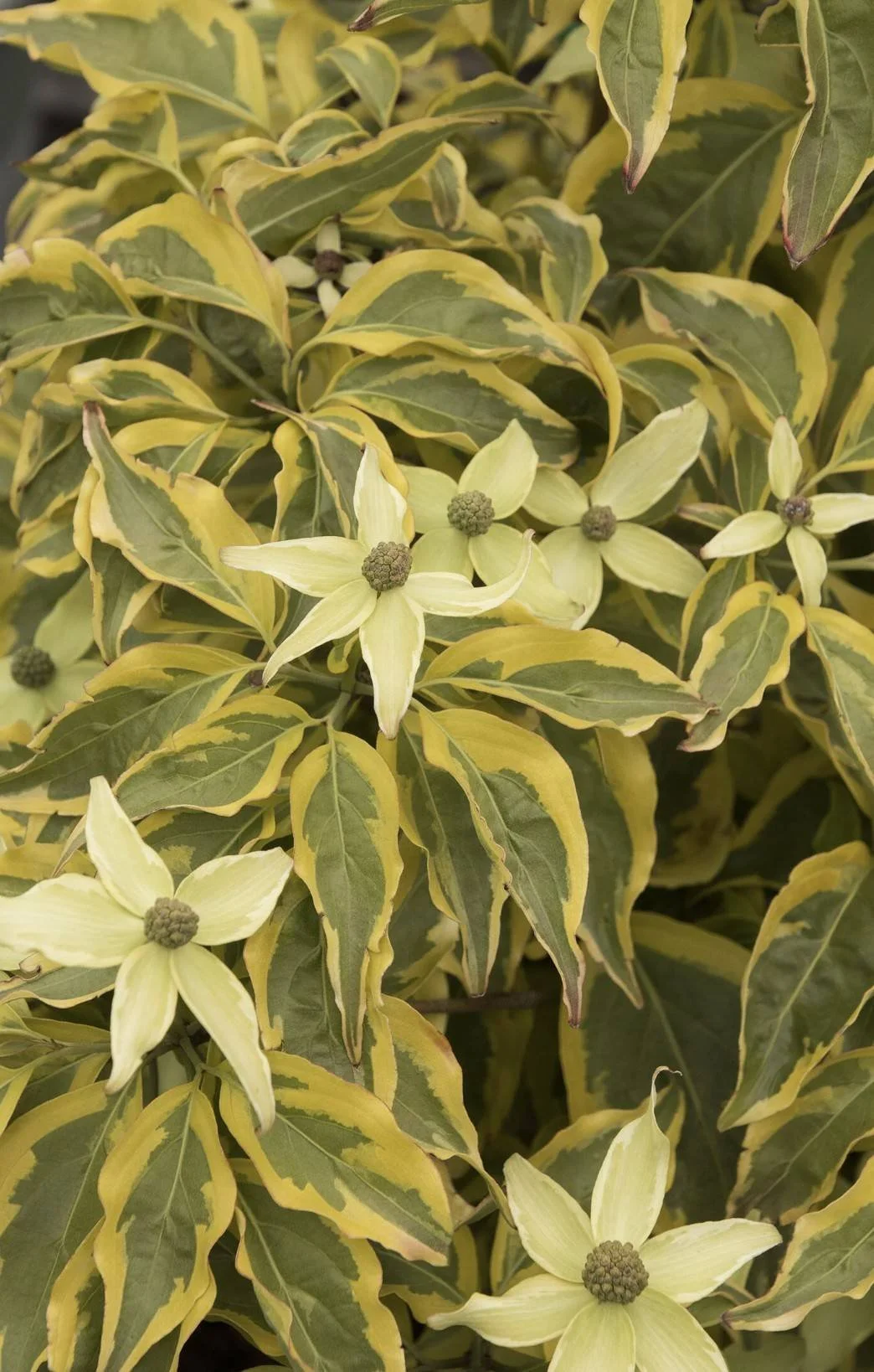
I also appreciate it as an option for smaller gardens. Its upright form when young and manageable size make it possible to enjoy the beauty of a dogwood even when space is limited. Not every garden has room for a large specimen tree, and this one proves you don't have to sacrifice character to fit the scale of your landscape.
Height: 8 ft
Width: 4-6 ft
Sun: Half, Full
Water: Medium, Extra in Summer
Season: Spring/Fall
Hamamelis x intermedia 'Diane' | Diane Witch Hazel
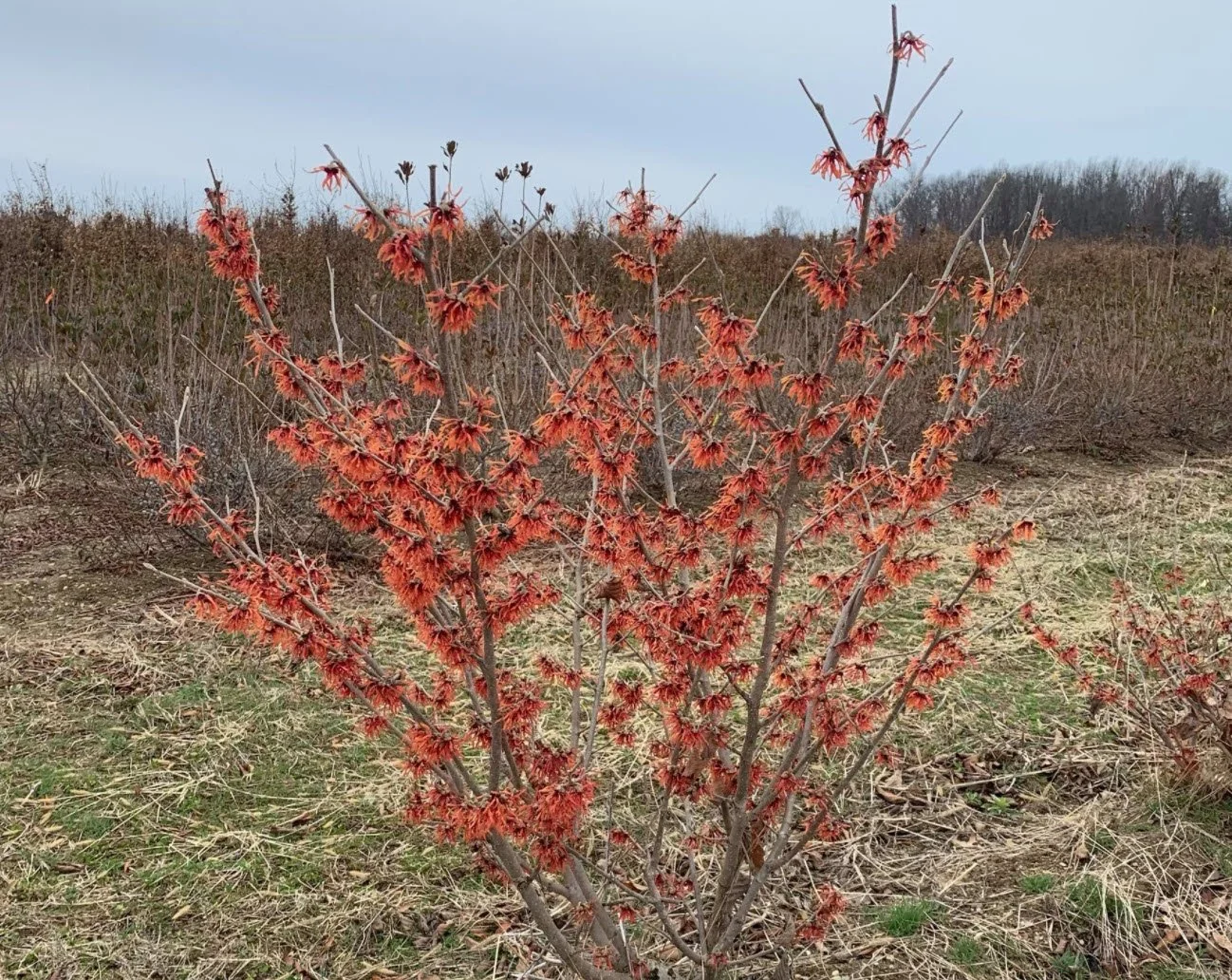
If you've ever walked through a garden in January and wondered whether anything could possibly be blooming, Witch Hazel has a way of surprising you. Just when the landscape feels quietest, its fragrant flowers unfurl in shades of coppery orange-red, glowing against the winter garden like little lanterns. The flowers themselves are worth a closer look, with ribbon-like petals that curl and twist in every direction. They appear before any new growth sets on the branches, stopping people in their tracks.
I often think witch hazels are one of the secrets to creating a garden that feels beautiful all year long. Winter is usually the hardest season to design for, yet they seem to rise to the challenge. When little else is happening, it's putting on a show. I also appreciate the crinkled texture of the leaves in spring and summer. The new growth is really quite beautiful. The prized season doesn’t end with winter. In autumn, the foliage turns rich shades of red and orange, providing one more reason to make space for this beauty.
It naturally grows as a broad, multi-stemmed shrub or small tree. While it stays relatively modest in height, it likes to stretch its arms out, so be sure to give it enough width to develop its graceful shape. It's particularly effective in partial shade, where its branching structure, winter flowers, and fall color can brighten the nooks and crannies of your garden.
Height: 8-12 ft
Width: 10-15 ft
Sun: Half, Full
Water: Medium
Season: Fall/Winter
Ginkgo biloba 'Goldspire' | Goldspire Ginkgo Tree
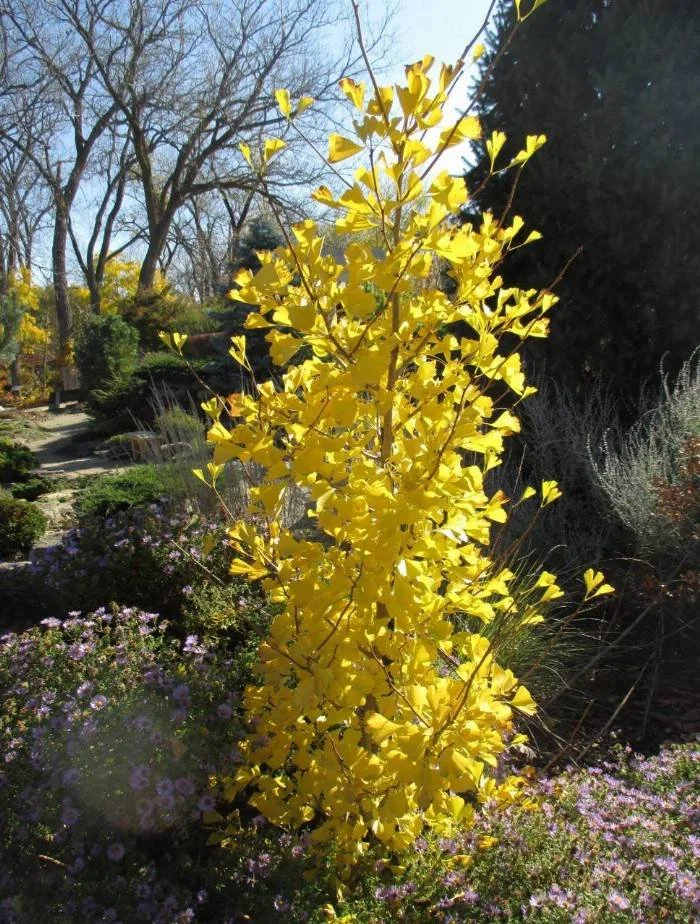
Who doesn't love a ginkgo? They're among the most recognizable and admired trees in the world. not to mention their ancient genes. The challenge is that the species eventually becomes quite large, and many of the gardens I work in simply don't have room for a towering shade tree.
Thankfully, there are now some excellent compact selections on the market. I've grown to appreciate cultivars like 'Jade Butterflies,' 'Munchkin,' and 'Mariken,' each bringing the beauty of a ginkgo to smaller spaces. But when clients tell me they're looking for a tree that's both narrow and relatively compact, this is often the one I recommend.
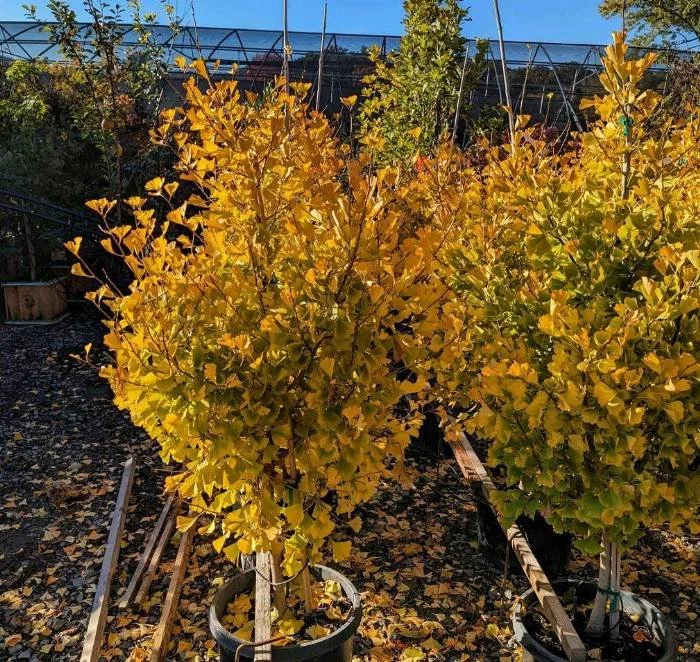
Its densely branched, vase-shaped form provides height without demanding too much width, making it a great fit for the front yards, side gardens, and tighter planting spaces that are common in residential landscapes. Bright green fan-shaped leaves create a clean, whimsical texture throughout the growing season before turning a brilliant gold in autumn.
As a fruitless male selection, it offers all the appeal of a ginkgo without the mess of fruit (and the stink -if you know you know). Slow-growing and graceful, it's a tree that rewards patience, becoming more beautiful with each passing year while remaining well-scaled for the spaces many gardeners actually have.
Height: 14-16 ft
Width: 4-6 ft
Sun: Full
Water: Medium, Extra in Summer
Season: Fall
Heptacodium mic. 'Temple of Bloom' | Temple of Bloom
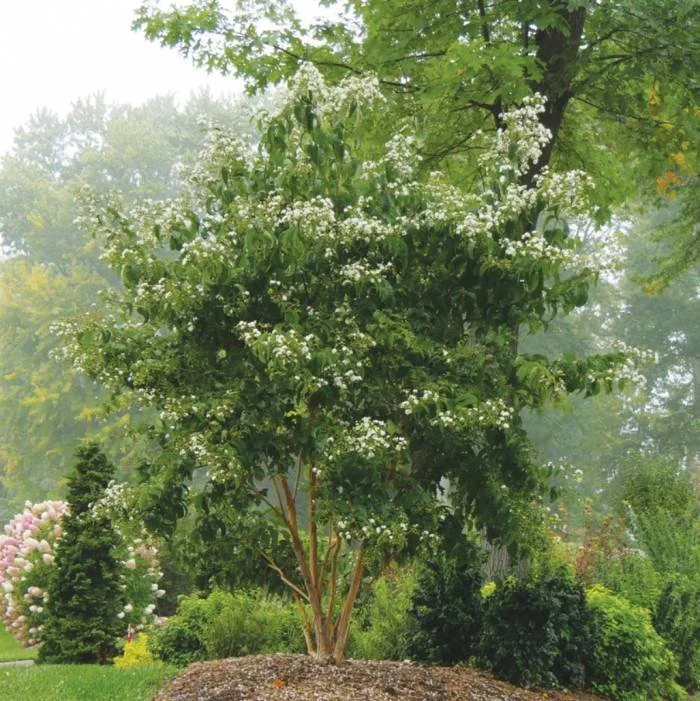
If I had to choose one small tree for year-round interest, Temple of Bloom seven-son flower would be high on the list. It always seems to have something worth noticing.
In spring, the foliage emerges with deeply etched veins that add texture to the landscape. As the season unfolds, the leaves grow larger and develop elegant, tapered tips that deserve mentioning. It's attractive enough at this stage to earn a place in the landscape on foliage alone.
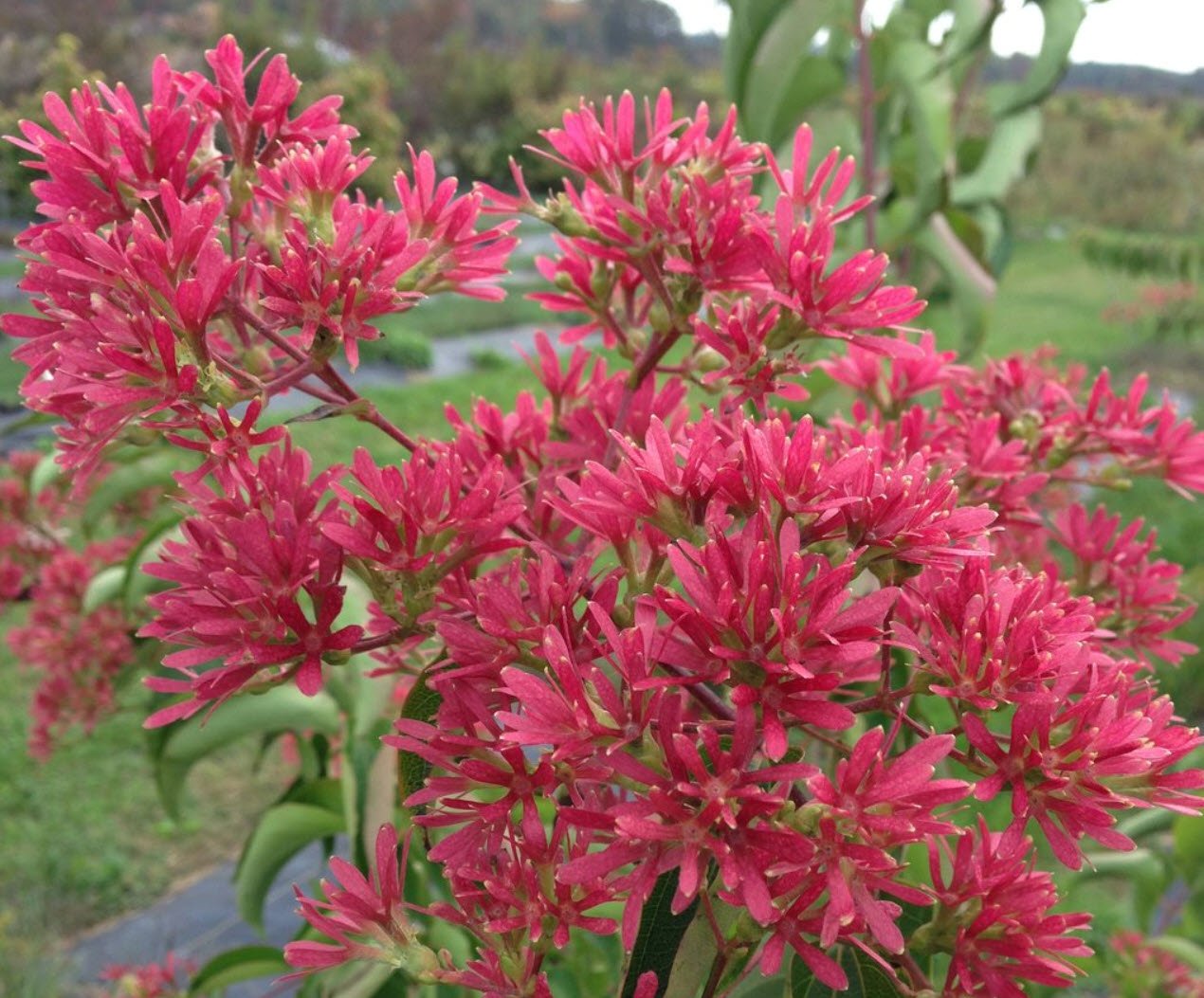
But the real show begins in late summer. Just as many flowering trees and shrubs are starting to fade, Temple of Bloom bursts into bloom with large clusters of fragrant white flowers. Hummingbirds, bees, and other pollinators seem to find it immediately, bringing a welcome burst of activity to the late-season garden.
When the flowers finally drop, the performance isn't over. Bright red bracts remain behind, creating the illusion that the tree has decided to bloom all over again in a completely different color. Then, in winter, the leaves fall away to reveal one of my favorite features: beautiful exfoliating bark in soft shades of tan and cream, along with a graceful branching structure that gives the tree presence even in the quietest season. We often overlook the benefits of bark texture and what it brings to the winter months.
Some plants have a moment. Temple of Bloom seems to have a season for everything.
Height: 6-10 ft
Width: 6-10 ft
Sun: Full
Water: Medium
Season: Summer/Fall
Magnolia 'Genie' | Genie Magnolia
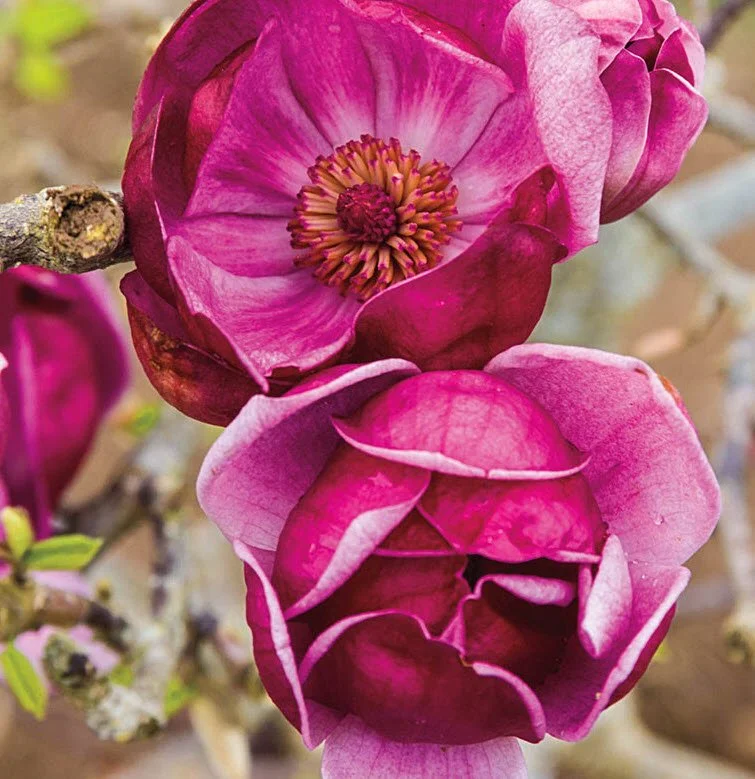
If we're making a list of favorite trees, surely a magnolia has to be on it. Few trees announce the arrival of spring with the same confidence, and this variety does it with a level of drama that's hard to match.
Before a single leaf emerges, the branches become covered in large, goblet-shaped flowers in rich shades of deep burgundy-red. Among the tulip magnolias, it's one of the darkest-flowering selections available, creating a striking display that seems to glow against the still-bare landscape of early spring.
What I especially appreciate is that it delivers all of that floral impact in a size that fits comfortably into most residential gardens. Its naturally slender, multi-branched habit makes it an elegant specimen tree, but it can also be planted in groups for a flowering screen or even grown in a large container.
Some trees are subtle. This magnolia is not one of them. For a few weeks each spring, it becomes the undeniable centerpiece of the garden, and that's exactly why I love it.
Height: 10 ft
Width: 5 ft
Sun: Full, Half
Water: Medium
Season: Spring/Summer
Crabapples
Malus 'Adirondack' | Adirondack Crabapple
Malus x 'Lollipop' | Lollipop Crabapple
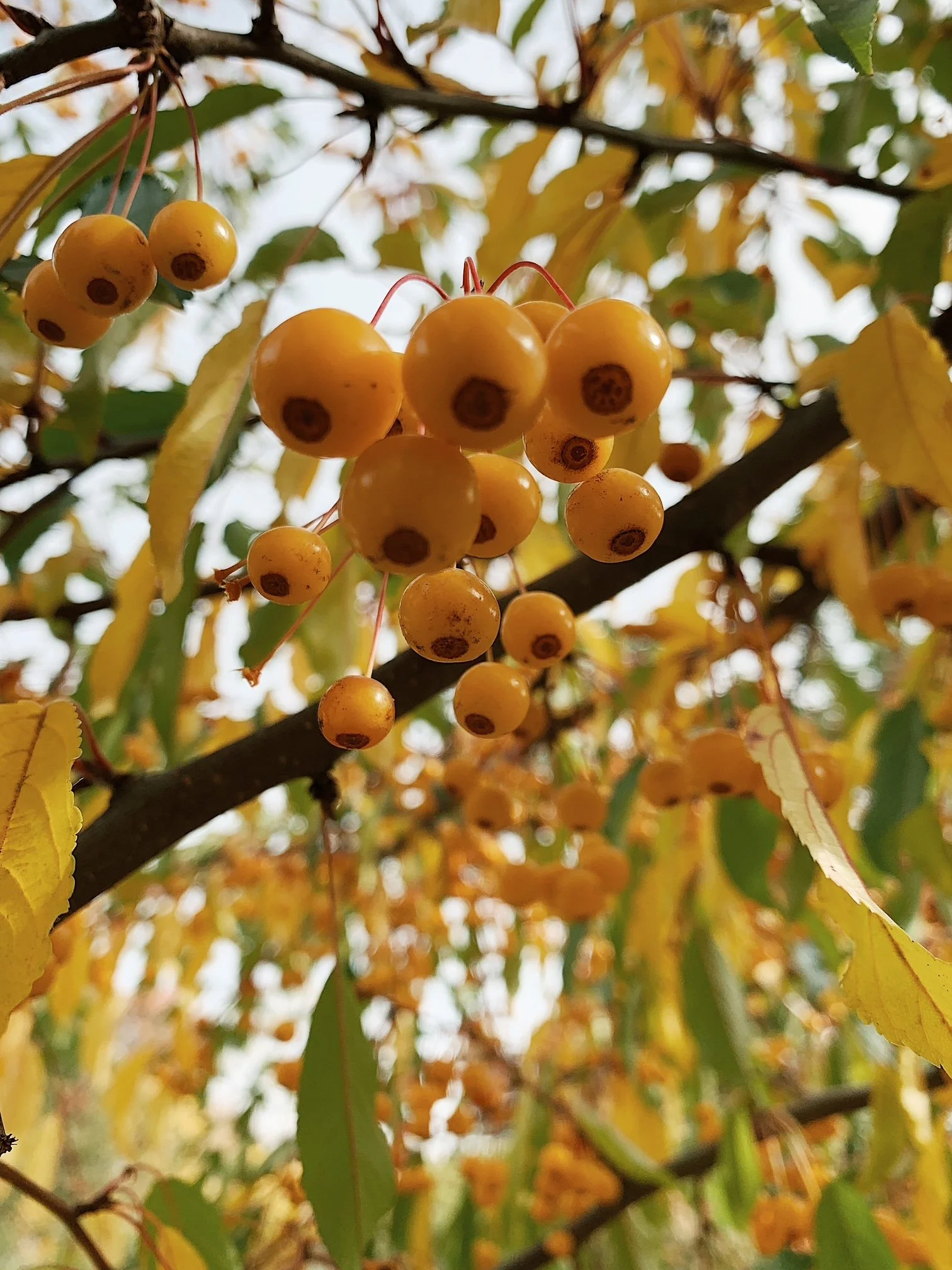
Malus transitoria ‘Schmidtcutleaf’ GOLDEN RAINDROP | Golden Raindrops Crabapple
If I had to choose a flowering tree for the widest range of gardens, there's a good chance one of these three crabapples would make the short list. I grouped them together because they share many of the qualities people love—beautiful spring flowers, attractive fruit, excellent disease resistance, and seasonal interest—while differing just enough in form, texture, and color to suit different landscapes and personal preferences.
'Adirondack' offers a narrow, upright habit with classic white blooms and orange-red fall color. 'Lollipop' stays exceptionally compact, forming a neat globe of flowers and foliage that's perfect for smaller spaces. 'Golden Raindrops' brings a more delicate texture with finely cut foliage and small golden fruit that persist into fall and winter.
When helping clients choose a crabapple, I find that one of these three almost always fits the bill. The decision usually comes down to the character of the yard and what kind of preferences the homeowner has.
Adirondack
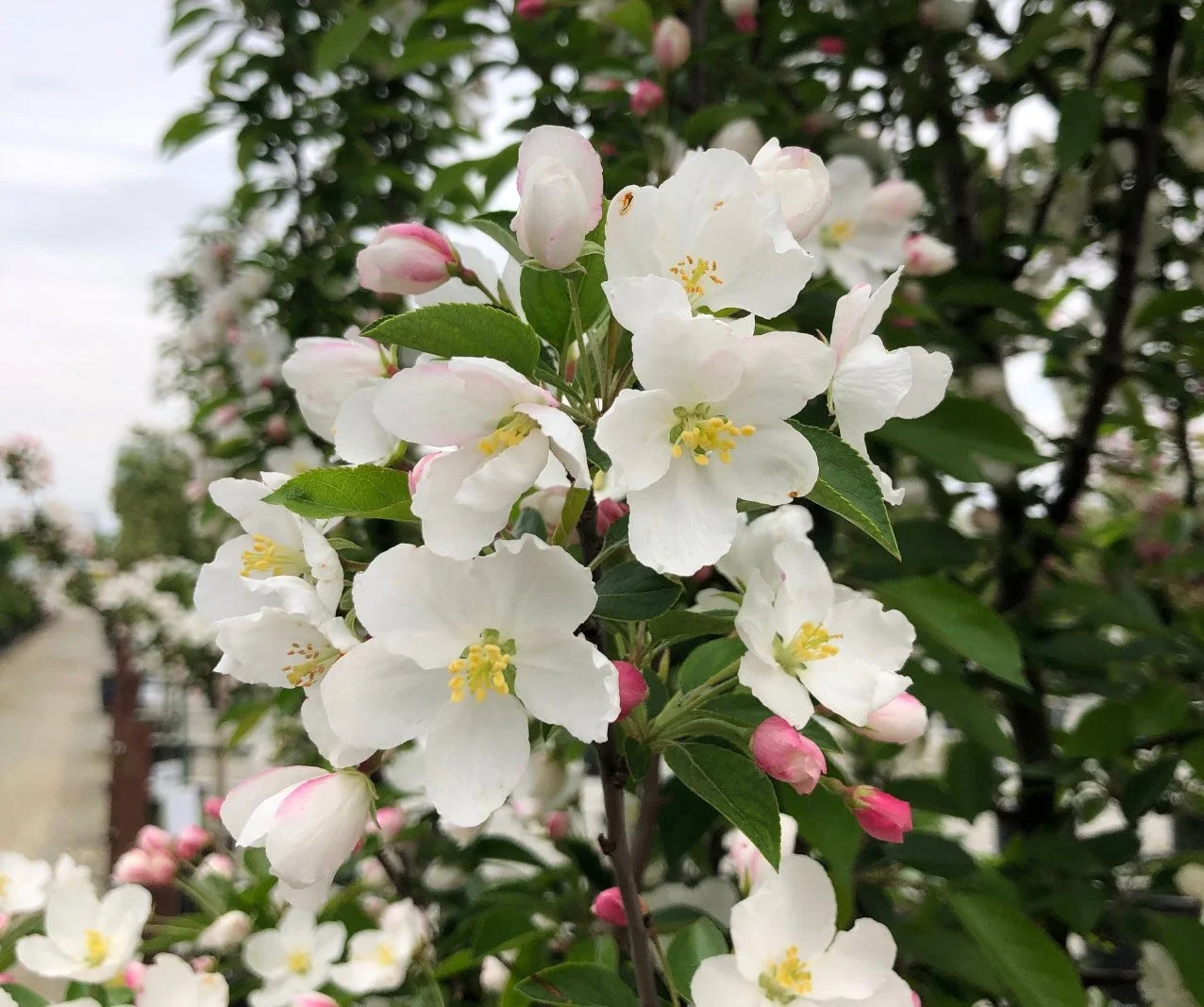
Height: 20-25 ft
Width: 6-12 ft
Sun: Full
Water: Low
Season: Spring/Fall
Lollipop
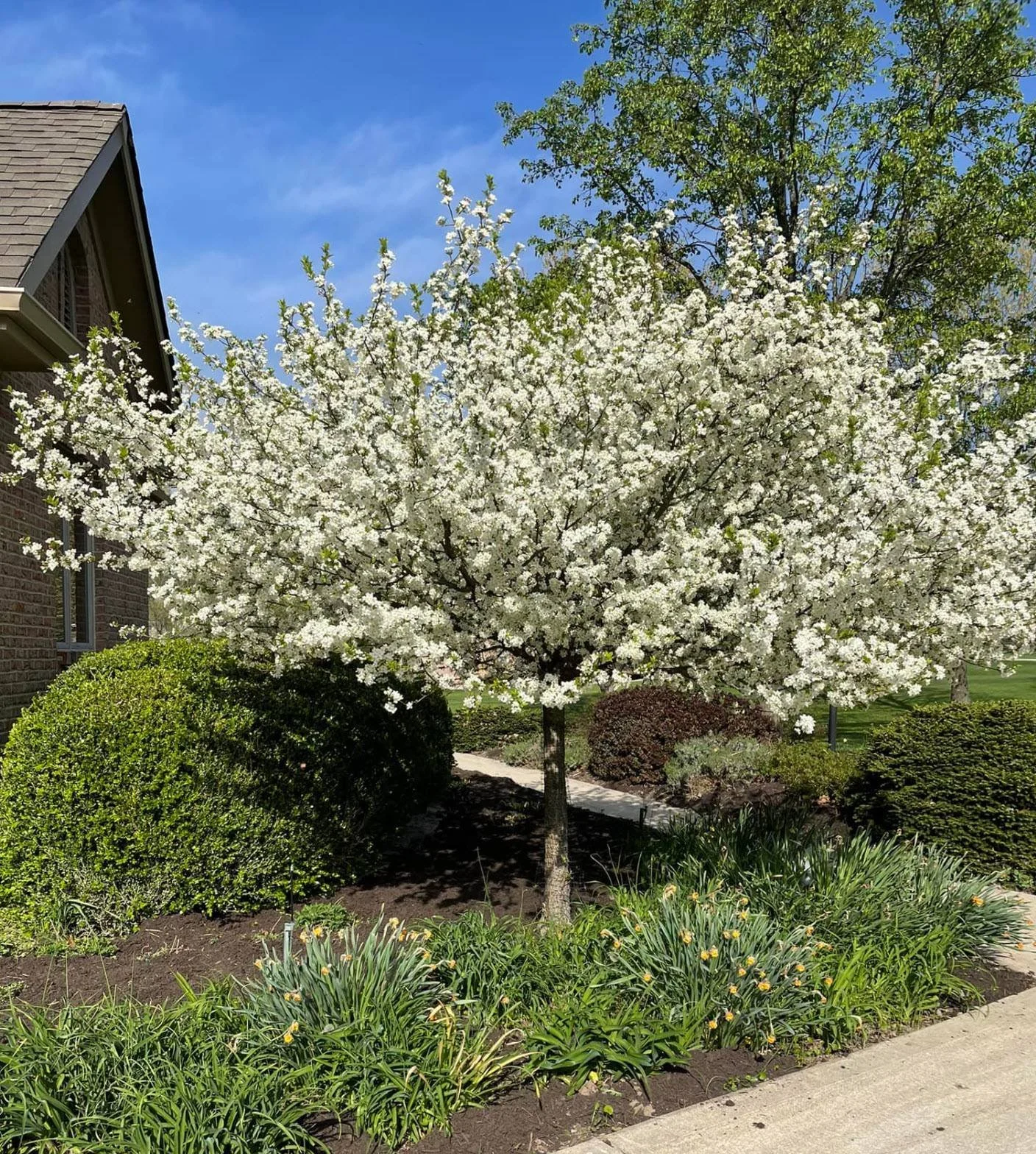
Height: 10 ft
Width: 10 ft
Sun: Full, Half
Water: Medium
Season: Spring/Summer
Golden Raindrops
Height: 20 ft
Width: 15 ft
Sun: Full
Water: Low
Season: Spring/Fall
Lagerstroemia indica 'Acoma' | Acoma Crape Myrtle
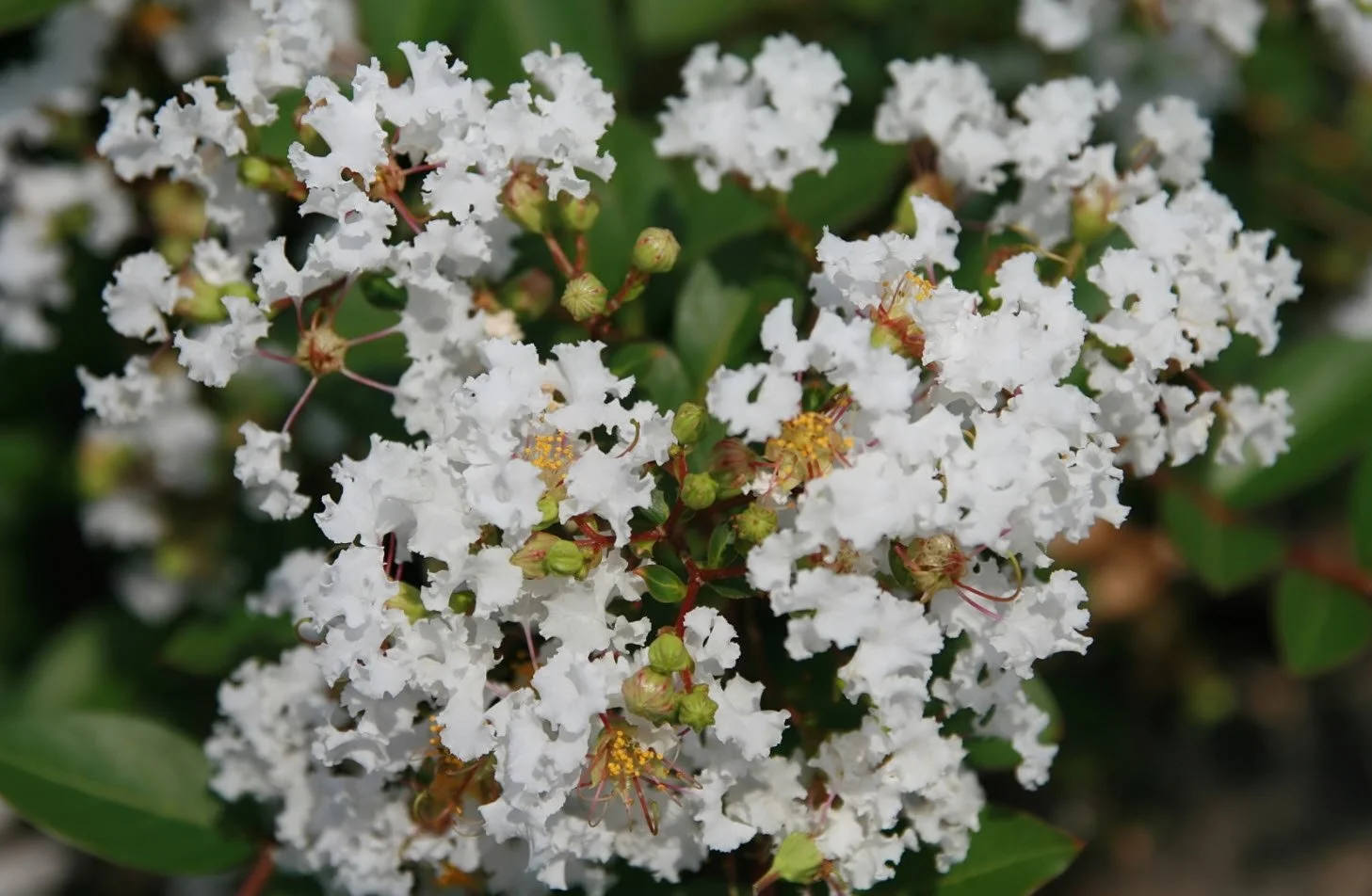
This dwarf crape myrtle is a good option for gardeners who want the long bloom season of a crape myrtle without committing to a large tree and continual pruning. Throughout summer, it produces clusters of white flowers that stand out nicely against the foliage.
I also like its naturally weeping habit, which gives it a softer look than many other small trees. As the seasons change, the foliage develops good fall color, and once the leaves drop, the peeling bark adds interest through the winter months.
Whether grown as a large shrub or a small tree, it's an easy plant to fit into most residential landscapes. Its excellent mildew resistance is another bonus, helping it stay attractive throughout the growing season.
Height: 6-8 ft
Width: 6-8 ft
Sun: Full
Water: Low
Season: Summer
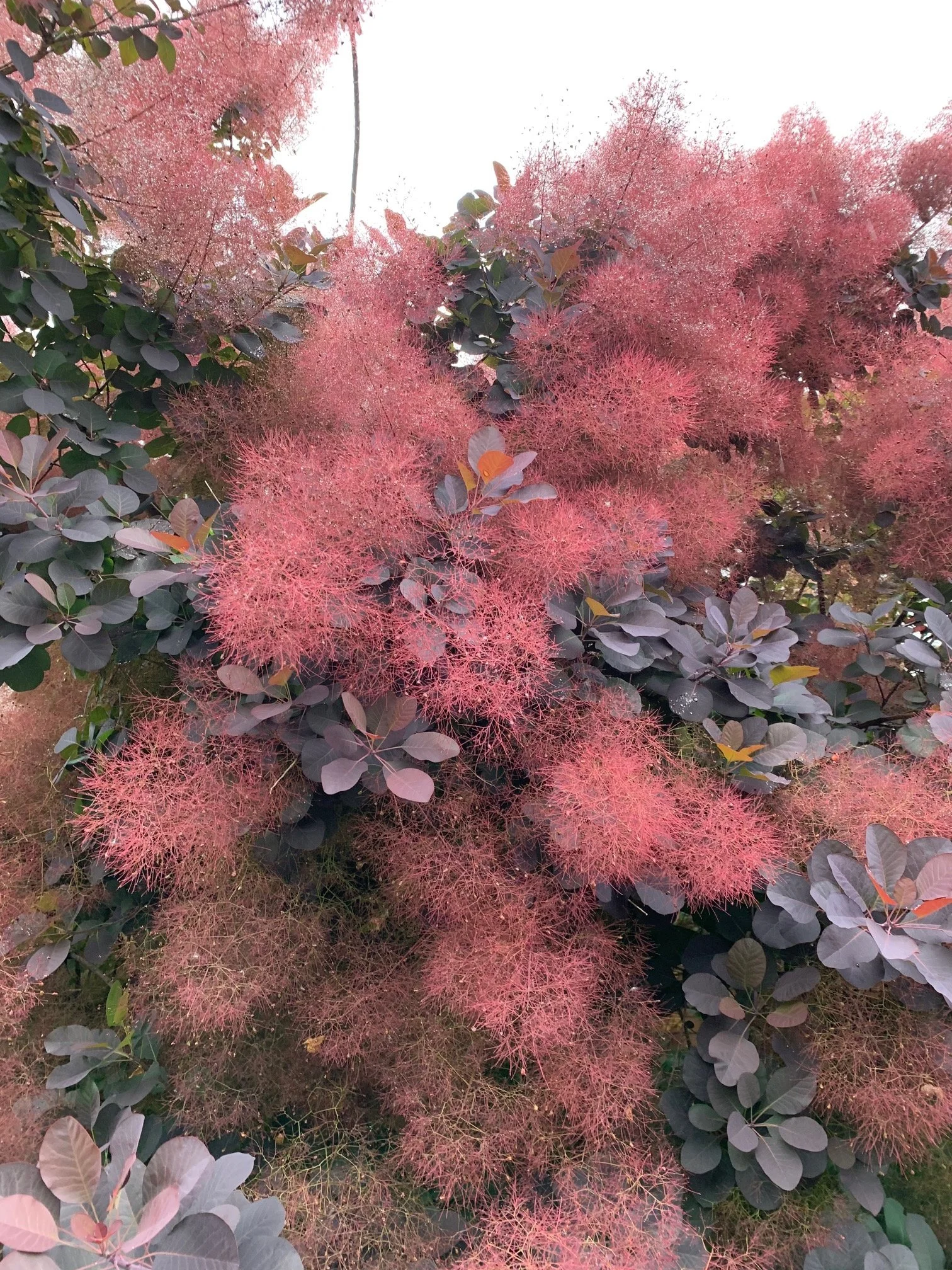
Cotinus x 'Young Lady' | Young Lady Smokebush
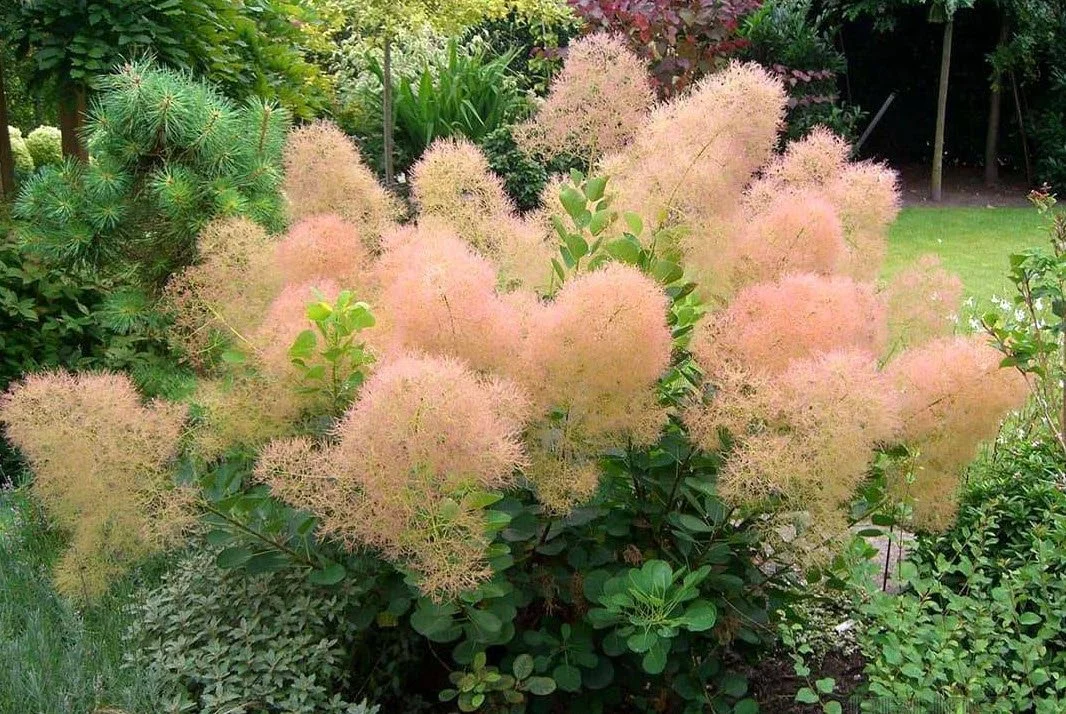
It's hard for me to pick a favorite smokebush. There are so many great varieties on the market, each with its own strengths. 'Young Lady' earns its place on the list because it begins flowering at a much younger age than many other smokebushes, producing the airy, cloud-like blooms the genus is known for without requiring years of patience. In fall, the foliage puts on a show with vibrant shades of orange and red.
One thing I always tell people about smokebushes is that they tend to have a mind of their own. Their branching can be a little quirky, and they don't always develop the shape you might expect if left completely unattended. A bit of strategic pruning early on can go a long way toward creating a more attractive, predictable structure while still preserving the character that makes smokebushes so interesting.
For gardeners who appreciate plants with personality, that's part of the appeal.
Height: 4-8 ft
Width: 6-10 ft
Sun: Full, Half
Water: Low
Season: Summer
Whether you're searching for the best small trees for a small yard, narrow trees for tight spaces, flowering trees for front yards, or low-maintenance specimen trees, there are more options available today than ever before. Plant breeders and growers continue to introduce compact cultivars that bring all the beauty, seasonal interest, and character of larger trees into residential landscapes. The right small tree can provide shade, flowers, fall color, wildlife value, winter interest, and year-round structure without overwhelming the space. If you're planning a new landscape or looking to add a focal point to an existing garden, these are some of our favorite small trees for Portland, Oregon landscape designs and other residential landscapes where space is at a premium.